Typhoon Champi: 931 flights grounded across Asia as storm weakens over Taiwan
The system, which hit 298 km/h earlier in the week, has slowed to 155 km/h, causing one fatality in Taiwan and disrupting transport in the Philippines and Japan.
By Carolina Barrett ·
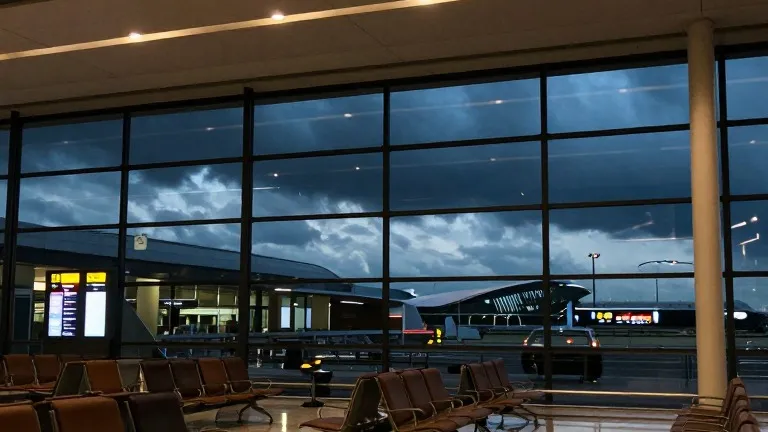
Travelers across Asia faced widespread disruptions on Friday as Typhoon Champi moved through the region. In Taiwan, authorities suspended all domestic and international air traffic, canceling 262 domestic flights and 669 international services. High-speed rail along the western coast remained operational, while Taipei’s subway system continued running with only light showers and gusty winds reported in the capital.
The storm’s impact extended beyond the main island. In southwestern Japan, the typhoon disrupted flights and cut power to nearly 2,000 homes on Ishigaki island. A woman in her 70s sustained a broken leg in strong winds on Miyako island. Dozens of flights to and from Miyako, Ishigaki, and Okinawa were canceled. In the northern Philippines, coast guards barred ships and ferries from sailing in rough waters. The main airport in Basco, capital of Batanes province, closed and canceled two local flights, with windows boarded up as a precaution.
Champi formed earlier this week, reaching maximum sustained winds of 298 kilometres per hour. It has since weakened to 155 kilometres per hour as it approaches from the southeast. The system has a radius of approximately 320 kilometres, covering most of Taiwan. Forecasts indicate the storm’s center will remain offshore as it passes the island's northeastern tip before turning north toward Japan's southwestern islands.
Taiwan’s Central Weather Administration advised residents in coastal areas to avoid outdoor activities and driving, warning of falling objects. The Transport Ministry confirmed the suspension of air travel while maintaining rail services. In the Philippines, provincial officials suspended classes in the island town of Calayan. Nearly 200 people in Cagayan province moved to safer ground, with almost 100 seeking shelter in government-run emergency facilities.
The storm has caused casualties in both Taiwan and Japan. In Taiwan, one person died on Thursday after being swept away by waves in Liuqiu, a small island off the southeastern coast. The fire department reported 94 other injuries. The government stated that more than 2,600 people were evacuated from vulnerable mountainous areas. In Japan, one person was injured in the strong winds.
The timeline of the storm’s path shows a rapid intensification followed by a gradual weakening. It passed over several Pacific islands, including Guam, earlier in the month, where a federal disaster area was declared. The system is expected to reach Japan’s southern mainland on Monday. Its greatest impact on Taiwan is anticipated to last through Saturday.
Transport networks are beginning to recover as the storm moves. While air travel remains suspended in Taiwan, ground transport in major cities like Taipei has resumed normal operations. In the Philippines, the closure of the Basco airport highlights the vulnerability of remote island infrastructure to weather events. The cancellation of flights across the region reflects the scale of the storm’s reach, affecting multiple countries simultaneously.
The storm’s radius of 320 kilometers ensures that even areas outside the direct path experience strong winds and rain. Experts note that the system’s movement offshore mitigates some of the potential damage in Taiwan. The coordination between weather agencies and transport ministries in Taiwan, Japan, and the Philippines demonstrates a regional response to the typhoon’s passage.
More Business · World news · Unethical Practices · Report a business · Got a Story?