Iranian officials dispute US claims of economic collapse amid ongoing blockade
While US authorities claim their maximum pressure campaign is rapidly shrinking Iran's economy, Tehran remains defiant, citing secured reserves and open trade routes to withstand the pressure.
By Youssef Carter ·
The ongoing naval blockade of Iranian ports by the United States is expected to cause further contraction in the Iranian economy, causing significant hardship for tens of millions of citizens. However, economic experts indicate that it is premature to determine if Washington's embargo strategy is achieving its intended goals of either collapsing the government or forcing Tehran to accept US demands.
Washington maintains that its combination of naval restrictions, overland trade disruptions, and sanctions is part of a successful maximum pressure campaign. To support potential military escalation, the US has deployed a third aircraft carrier to the region. This move aims to force Tehran to capitulate to demands for reopening the Strait of Hormuz and curbing its nuclear program, following a deadlock in the conflict that began in February with strikes killing Supreme Leader Ayatollah Ali Khamenei.
Despite the pressure, Iranian authorities assert their capacity to endure the economic strain. Recent strikes on US interests in the region, including radar systems in Bahrain, have been interpreted as a defiant response. Nevertheless, signs point to growing suffering among the general population. Tehran-based economist Peyman Molavi warned that if current conditions continue, inflation could rise sharply, affecting parallel markets such as foreign currencies, gold, and housing. He noted that the commodities market, encompassing energy and agricultural products, would likely face the most severe impact.
For decades, Iranian governments have addressed budget deficits by increasing the money supply, which has fueled chronic inflation. The foreign currency shortage resulting from disrupted oil exports has worsened this situation. Molavi estimates that the year-on-year growth of the money supply could reach 55 to 60 percent by the end of the Persian year in late March, up from nearly 51 percent currently. Coupled with negative economic growth, this could push annual inflation to about 85 percent and point-to-point inflation to 100 percent.
Central Bank Governor Abdolnaser Hemmati responded to US Treasury Secretary Scott Bessent, who leads the sanctions regime, by citing a local proverb about not counting chickens before autumn ends. Bessent has predicted a 25 percent contraction of the Iranian economy by March 2027. Official figures show that Iran's GDP shrank by 10.1 percent year-on-year in the first quarter of the Persian calendar year, ending in June 2026. Hemmati stated that the central bank has secured 30 billion dollars in foreign currency to manage the pressure and prioritize essential goods.
Economy Minister Ali Madanizadeh criticized the US approach on Sunday, arguing that officials rely on threats and new demands, ranging from predictions of collapse to military and economic intensity. He insisted that all overland routes to and from Iran remain open, with the exception of one route through Iraq that was closed for security reasons. This contradicts the US effort to isolate Iran from its neighbors.
According to the Statistical Centre of Iran, the 12-month average annual inflation for the month of Mehr, which ended in late October, was 76.8 percent. Point-to-point inflation for that period stood at 88.7 percent. Essential goods have experienced triple-digit inflation for several months, with food, beverages, and tobacco seeing year-on-year inflation of 113.4 percent in October.
Social media platforms are increasingly filled with personal accounts from Iranians, a country of about 90 million, describing a rapid loss of purchasing power. One user on X noted that the same commodities now cost five times more than they did last year, describing the situation as crushing for millions of people.
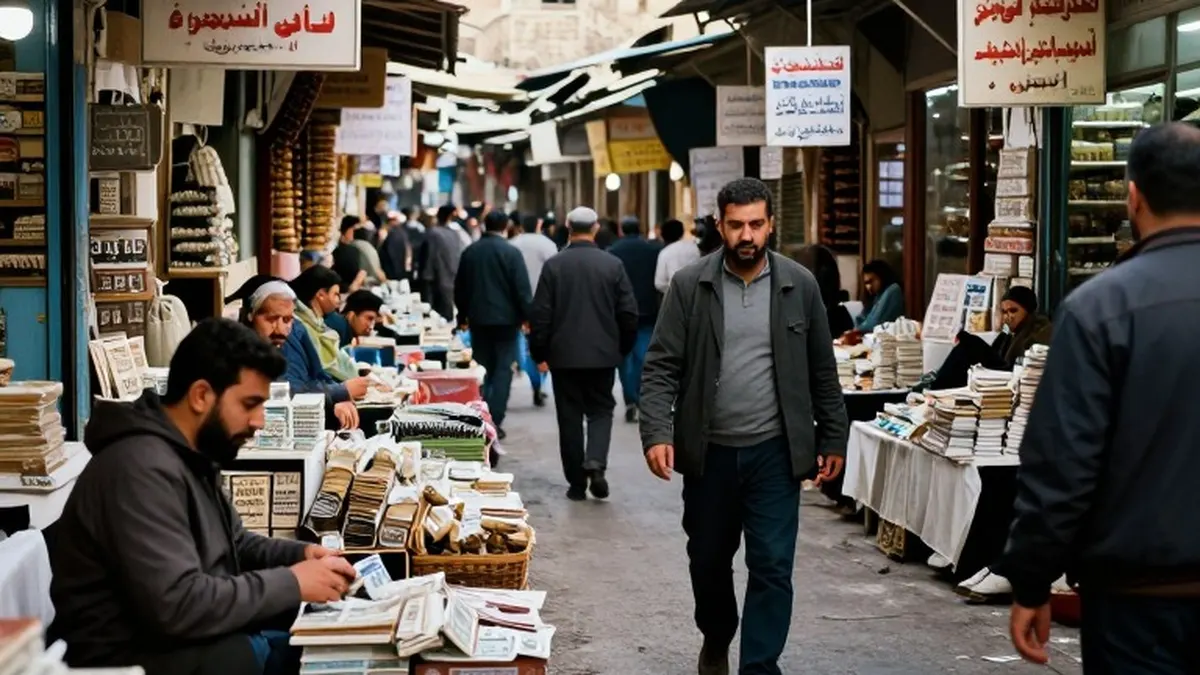
In Tehran's Grand Bazaar, Saleh, a 37-year-old shopkeeper who sells electric motors, reported that while domestic and Chinese goods remain available, supply and demand have decreased since the sanctions took effect. He attributed the stagnation to high commodity prices and market uncertainty. Saleh explained that while price increases have maintained some profit margins, sales volume has dropped significantly. He does not foresee a market collapse but notes a clear reduction in business activity, with established companies proving more resilient.
Bessent described the current situation as one of the fastest economic collapses in history and labeled the sanctions campaign the greatest economic isolation of a single country in world history. He compared Iran's situation to the period before the Soviet Union's fall in 1991, noting a 22 percent economic shrinkage over three years. Molavi argued that the comparison may not lead to immediate collapse due to differing economic models. However, he pointed out that Iran's nominal GDP has fallen from 645 billion dollars in 2012 to approximately 300 billion dollars now, with potential for further decline if sanctions persist.