Iranian General Says US Navy Cannot Enter Gulf as Crude Rises
Tehran's military chief warned of attacks on American vessels while President Trump debated further bombing runs amid strikes across the Middle East.
By Amir Bennett ·
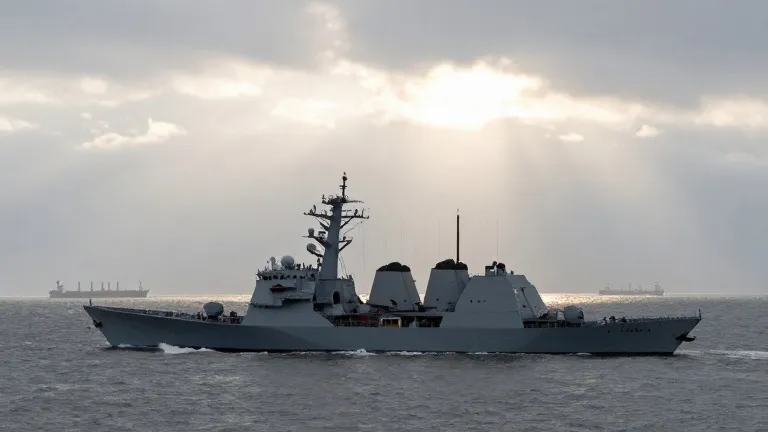
Iran's armed forces signaled readiness to strike American ships on Saturday as President Donald Trump weighed launching another wave of bombing against Tehran. At a rally in Florida on Friday, Trump told supporters the US military "may do another Epic Fury", referencing the opening campaign of the war. He had earlier floated two choices: a massive strike to end the fighting quickly, or continued reliance on the naval blockade and sanctions to pressure Iran.
Ali Abdollahi, chief of general staff of Iran's armed forces, said on Saturday morning that the US Navy cannot re-enter Iranian territorial waters or surrounding areas because Iran can target vessels there. "The US president can only dream of their soldiers and military again entering the Persian Gulf," Abdollahi said in a statement carried by state media. He also rejected Washington's assessments of Iranian military weakness, noting that the US has not brought aircraft carriers and support ships closer to Iranian territory. Abdollahi said Iran intends to "drown" the US and Israel in a "quagmire" over the February 28 attack that opened the eight-month conflict.
Violence around the Strait of Hormuz continues to affect energy markets. Brent crude traded near $117, the highest level since April. The Islamic Revolutionary Guard Corps reported seven tankers were attacked or struck mines overnight into Thursday, and claimed two more supertankers hit mines on Friday. Washington has reportedly instructed many diplomatic staff to leave Saudi Arabia, with others scheduled to depart additional regional countries.
Fighting extends across several fronts. Houthi forces in Yemen struck Riyadh on Saturday, following recent attacks on Dammam's international airport and the Shaybah oilfield, while Saudi aircraft bombed Houthi-held Marib and Taiz. Reported Israeli strikes hit near Nabatieh in southern Lebanon, and artillery landed near Zawtar ash-Sharqiyah. Israeli Prime Minister Benjamin Netanyahu ordered a lockdown of the occupied West Bank after a Palestinian attack killed two soldiers in Hebron; Israelis vote on October 27.
Iranian state-linked media and analysts say Tehran has activated a "dead hand" doctrine, which they claim would allow attacks on US, Israeli and regional interests to proceed from all 31 provinces if senior leaders are killed again. The IRGC has threatened seabed internet and communication cables if civilian infrastructure is hit again. Axios, citing US intelligence, reported on Saturday that Iran has "substantially increased" efforts to strike American officials in the Middle East and elsewhere.
Mediated talks between Tehran and Washington have yielded no progress. Senior diplomats from Turkiye, Saudi Arabia, Pakistan, Egypt met counterparts from the UK, France, Germany and Italy in Istanbul on Friday, without US or Iranian officials present. Turkiye's Foreign Minister Hakan Fidan said a new attack on Iran "would widen the war and spread the conflict across the region", adding that "no one is endorsing it at this point." Nour News, affiliated with Iran's Supreme National Security Council, described a "gap between diplomatic claims and realities in the field." Analyst Reza Nasri wrote on X that Iran "will no longer negotiate under bombardment" and will end the cycle "by all necessary means".
image_prompt":