Iran's Middle Class Vanishes as Inflation Hits 90 Percent and Food Costs Double
Rising prices and a weakened currency have forced Iranian households to abandon savings and cut back on essential meals, signaling a deepening economic crisis.
By Amir Bennett ·
The cost of a standard meal in Iran has nearly doubled in just twelve months, marking a critical turning point in the country's economic stability. This surge in food prices is not an isolated incident but part of a broader collapse in purchasing power that is reshaping daily life for millions. The rial's steady decline against the dollar has eroded wages, leaving even middle-class families unable to maintain their previous standards of living.
The backdrop for this financial squeeze is a series of geopolitical and economic shocks. The conflict between the United States, Israel, and Iran, which began on February 28, has damaged key infrastructure and disrupted trade routes. A US naval blockade of Iranian ports has severely limited oil exports and the import of essential goods. Additionally, Iranian attacks aimed at controlling the Strait of Hormuz have further complicated global shipping. In August, the US Treasury launched a new sanctions effort described as Economic D-Day, designed to isolate Tehran financially.
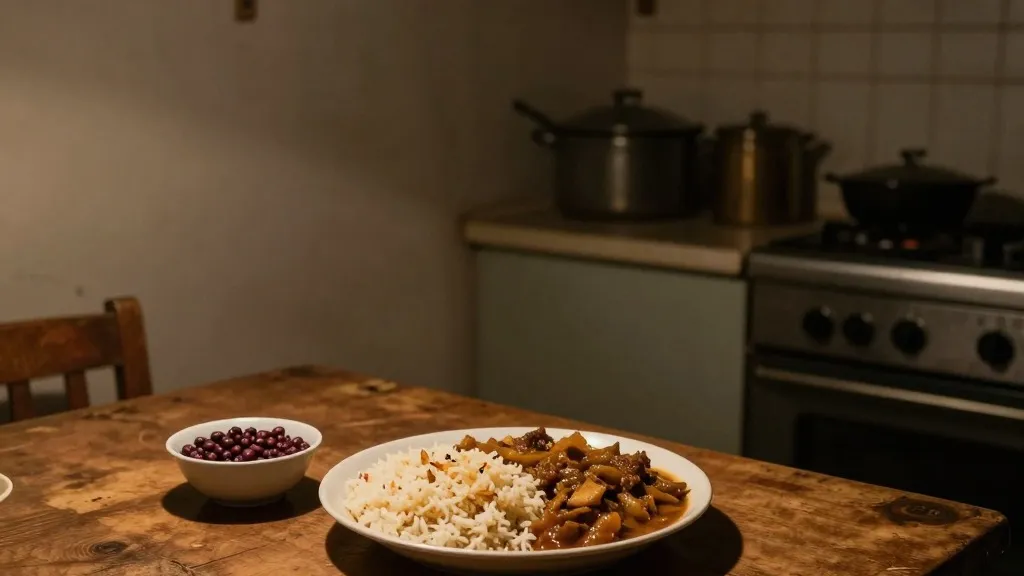
Field surveys conducted in central Tehran reveal a fundamental shift in household behavior. Families are now prioritizing basic necessities and abandoning activities that were once standard for the middle class. The cost of home cooking has become a primary burden. A traditional herb stew, ghormeh sabzi, served with rice, now costs 23 million rials, or about 8.45 US dollars. Even simple potato patties cost around 4 million rials. These figures reflect a broader trend where dining out and social eating have become rare luxuries.
Households are making difficult choices about which members receive protein. One woman reported that her family reserves most of the meat and chicken for their children, who are still growing. She and her husband now rely on legumes and meat substitutes. The fear is that further price increases will eventually force them to cut meat from the children's diets as well. This rationing strategy highlights how inflation is hitting the most vulnerable within the family unit first.
Data from the fact-checking outlet Factnameh provides a stark look at the numbers. In September, a basket of 11 essential food items cost 56 million rials, or 20.70 US dollars, per person. For a family of three, the total exceeds 168 million rials, or 61.70 US dollars. The government's food voucher, valued at 10 million rials, now covers less than 18 percent of this per-person cost. This is a significant drop from the approximately 30 percent coverage seen in December 2025. Annual inflation reached 89.9 percent in September, while the estimated monthly wage hovers around 100 US dollars.
Central Bank Governor Abdolnaser Hemmati acknowledged on October 23 that the people are bearing a heavy burden. However, he maintained that the efforts to isolate the Iranian economy have not achieved their primary goal. This official stance contrasts with the reality on the ground, where individuals report feeling the pressure of every transaction. The disconnect between policy goals and lived experience is widening as the rial continues to lose value.
The strain is not limited to low-income earners. A middle-aged man in western Tehran, whose household income reaches 1 billion rials, or 367 US dollars, said he can manage current expenses but has no savings for the future. His income is well above the average monthly household income in Tehran, which is approximately 600 million rials, or 220 US dollars. For him, travel, dining out, and saving have disappeared from his routine. He describes a life of immediate survival without long-term security.
Even younger professionals are adjusting their social habits to cope. A 28-year-old woman in Tehran, earning 400 million rials, or 147 US dollars, per month, said she has changed how she interacts with friends. Instead of weekly cafe visits, she and her friends now order one dish to share between two people. This practice of splitting costs has become the only way to make social outings affordable. As these patterns spread, the social fabric of urban Iran is quietly transforming under the weight of economic pressure.