Tennessee Defense Counsel Details IV Failures During Christa Pike Execution
A new court filing reveals that medical staff struggled to insert needles into Christa Pike's arms before administering lethal drugs in a botched September procedure.
By Amir Bennett ·
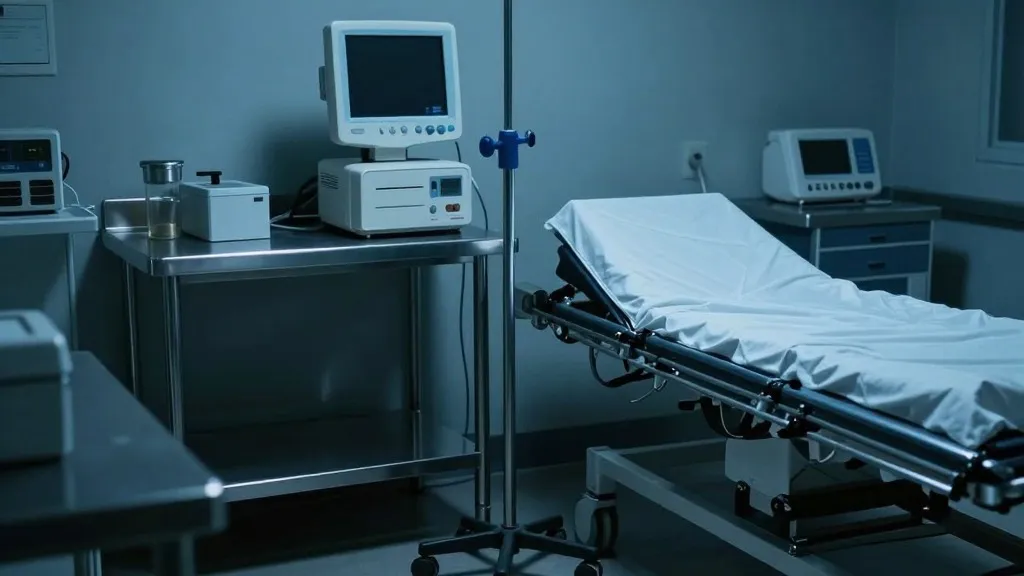
The administration of lethal injection in the United States relies on the technical precision of medical teams, a process that has drawn increasing scrutiny in recent years. A detailed court filing released Thursday offers a granular view of the difficulties faced by such a team during a failed execution in Tennessee. The document describes the specific challenges encountered by medical staff as they attempted to establish the necessary intravenous lines for inmate Christa Pike.
The filing, submitted by attorney Randy Spivey, outlines a procedure that stretched significantly beyond the typical timeframe. The team used approximately ten needles and tested multiple sites on both of Pike's arms. Spivey noted that even after the final site was established, the medical staff had difficulty pushing saline through the line. The entire process of securing the two required IVs took close to an hour, with the left arm taking nearly sixty minutes to resolve.
Christa Pike, now 50, has been on Tennessee's death row for a crime committed when she was 18. She was convicted in 1995 for the stabbing death of a classmate, Colleen Slemmer. This incident made her one of the youngest women ever sentenced to capital punishment in the state. Her case has become a focal point for broader legal challenges regarding the state's execution protocols.
The timeline in the filing shows the team beginning the IV placement process at 6:34 p.m. They faced immediate resistance, with Pike assisting by suggesting they search her upper arm for usable veins. While an IV was placed in her right arm within six minutes, the left side proved problematic. Spivey described Pike as wincing and grimacing as the team moved needles around. At one point, a team member expressed concern that a vein might be blowing, while two others remained uncertain. A later needle appeared severely bent upon removal, leading one staff member to state that they believed the vein had blown. By 7:13 p.m., the team declared the left IV successfully placed.
Phone communications from the execution chamber began roughly five minutes after the IVs were secured. Spivey reported that the team pushing the drugs from an adjoining room repeatedly asked the IV team to check Pike's left arm. It is not clear exactly when the pentobarbital entered the lines, but at 7:34 p.m., Pike reported a burning sensation and felt her arm was about to burst. Over the next thirty minutes, she strained and struggled to breathe. Spivey requested a phone to coordinate with colleagues, but he was led on a seven-minute route through the facility before being allowed to call.
Spivey contacted fellow attorneys to halt the procedure, noting that a third dose of the drug was not authorized. He also informed the deputy attorney general that Pike required immediate medical attention. An ambulance was dispatched at 8:50 p.m., and medical staff were performing life-saving measures shortly thereafter. Pike was hospitalized after surviving two doses of the lethal drug on September 30. She was placed on a ventilator for several days and has since returned to prison. The filing supports arguments by attorneys challenging the state's lethal injection methods, with one lawyer stating that predictions of botched executions have proven accurate without substantial procedural changes.