Jordan King Vows Iron Fist After Church Ambush
Extremists targeted a Greek Orthodox funeral in Hammoud, wounding 34 others.
By Carolina Barrett ·
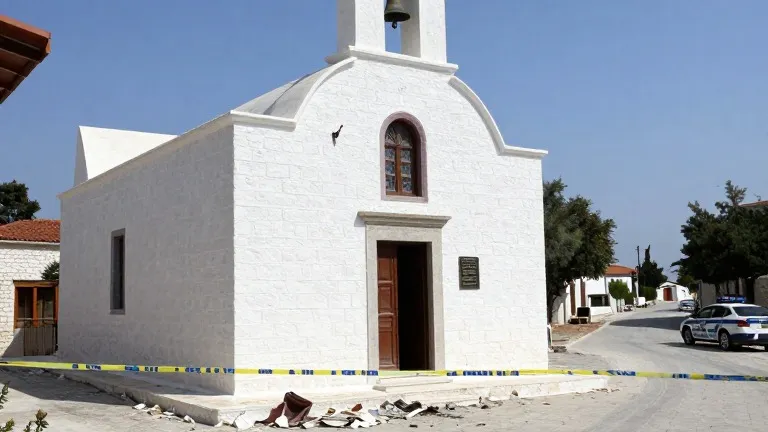
Three gunmen opened fire on a Greek Orthodox church in southern Jordan on Friday, killing at least seven people during a funeral service. The attack occurred in the village of Hammoud, located in Karak governorate, approximately 110 miles south of the capital, Amman. Authorities described the incident as a rare assault on the country's Christian minority.
Interior Minister Mazen Al-Faraya announced at a press conference that 34 additional individuals sustained injuries. He identified a group of extremists as the party responsible for the shooting. The public security directorate reported that the assailants exited a vehicle during the funeral procession and stormed the church compound before beginning the barrage. A manhunt for the perpetrators is currently underway.
State broadcaster Al-Mamlaka aired video footage showing the moment of the attack. The clip captures two men in casual clothing holding pistols and a third carrying a long gun. They fire from the street entrance before advancing into the building. An eyewitness told the broadcaster that the attackers fired continuously for five minutes before fleeing in their vehicle. The witness estimated that between 150 and 200 people were inside or near the church. Most of the victims were reported to be between 50 and 70 years old.
King Abdullah II pledged the "harshest retaliation" against those responsible for the violence. In a social media post, he stated, "Every Jordanian life is precious, and we will strike with an iron fist against those who dare to threaten our nation." Minister of Government Communications Mohammed Al-Momani confirmed that security forces are actively investigating the incident.
Joseph Aoun, the Lebanese president and the only Christian head of state in the Arab world, condemned the event as a "heinous terrorist attack." A statement from the Lebanese presidency noted that the shooting reaffirms that terrorism has no religion or homeland, aiming instead to strike at coexistence and spread strife. Karak has a history of deadly violence. In 2016, gunmen ambushed police in the region, including at a Crusader castle, killing ten people, seven of whom were officers, before security forces ended a lengthy standoff.