40 Years: The Sentence Hanging Over Mexico's Former Prosecutor
César Jáuregui faces a potential four-decade prison term after a judge approved state charges, while federal prosecutors pursue a rare treason count for allowing U.S. agents into a sensitive drug lab raid.
By Youssef Carter ·
César Jáuregui, the former attorney general of Chihuahua, now faces the possibility of up to 40 years in prison. This potential sentence stems from a federal treason charge that has turned a localized legal dispute into a major diplomatic friction point between Mexico and the United States. The core of the conflict lies in whether a state official can authorize foreign agents to participate in a field operation without explicit federal approval. This question has intensified scrutiny on the boundaries of Mexican sovereignty and the role of U.S. intelligence on Mexican soil.
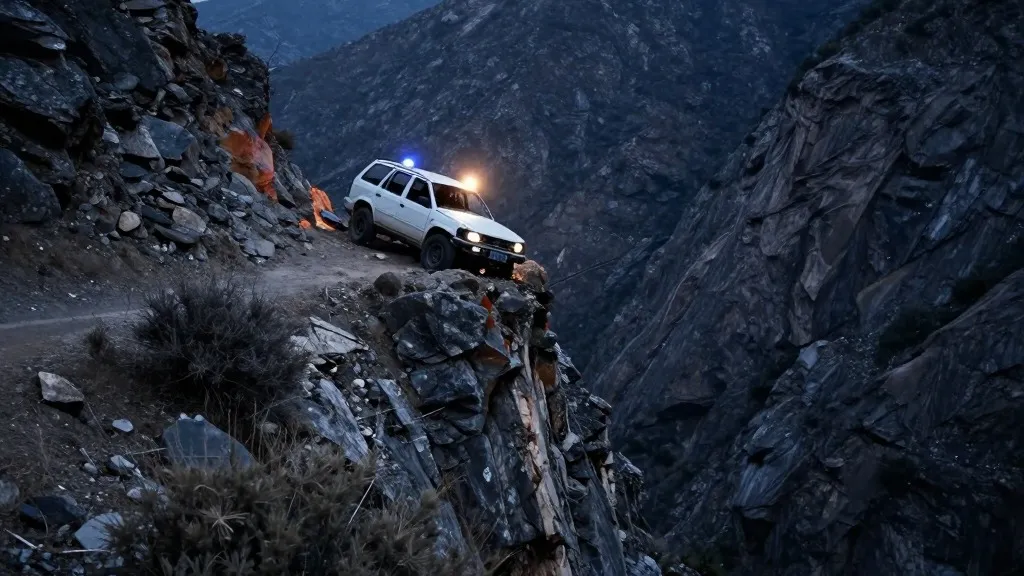
The legal trouble traces back to an April operation aimed at dismantling a large chemical drug lab in the Morelos municipality. On April 19, the Chihuahua Attorney General's Office announced the lab's destruction. However, the mission ended in tragedy when a vehicle in the convoy left the road and crashed into a ravine. The accident killed two state officials and two Americans. Jáuregui had described the deceased Americans as instructor officers engaged in binational anti-drug training. He noted that the suspects escaped, leaving the operation without arrests despite the loss of life.
Federal prosecutors argue that Jáuregui endangered national security by permitting U.S. agents to join the field operation, a decision they say is reserved for the federal government. The treason charge carries a penalty ranging from five to 40 years. While the state charges for illegal exercise of public office have already been approved for trial by a judge this Thursday, a federal judge is scheduled to rule on Saturday whether the treason indictment can proceed. Defense attorney Héctor Villasana stated that prosecutors sought an exemplary punishment during a closed hearing to prevent a scenario similar to the U.S. removal of Venezuelan President Nicolás Maduro.
Legal experts remain skeptical that the treason charge will survive. Samuel González, a former chief prosecutor for organized crime, suggested that while Jáuregui may have failed in his duties by not informing federal authorities or allowing armed foreign agents, this does not constitute treason. He described the crime as typically reserved for wartime contexts. Carlos Pérez Ricart of CIDE university noted that the case will have significant public impact regardless of the outcome. He called the move a political decision ahead of the 2027 midterm elections and warned that it sends a negative signal to Washington regarding cooperation.
Conflicting accounts have emerged regarding the status of the two deceased Americans. U.S. Ambassador Ronald Johnson referred to them as embassy personnel, while multiple sources familiar with the matter identified them as CIA agents. The CIA declined to comment on the deaths. Mexico's security ministry clarified that one individual entered as a visitor and the other held a diplomatic passport, but neither had formal accreditation for operational activities. President Claudia Sheinbaum stated that none of the agents had permission to operate in Mexico, reinforcing her emphasis on national sovereignty.
The incident highlights a long-standing tension in U.S. and Mexican security cooperation. Former President Andrés Manuel López Obrador had limited U.S. agency activities, and Sheinbaum has since amended the Constitution to require express Mexican authorization for field operations. Experts warn that without clearer rules, such unauthorized actions can lead to abuses. The U.S. State Department said it is watching the case closely, though it did not explicitly link the legal proceedings to the deaths of the two CIA agents. This evolving situation underscores the delicate balance Mexico seeks to maintain in its bilateral security relationships.
As the federal judge prepares to make a decision on Saturday, the stakes remain high for both nations. The outcome will influence how future joint operations are structured and monitored. For Jáuregui, the coming months will determine whether he faces a lengthy prison sentence or a dismissal that could redefine the limits of state-level authority in foreign affairs. The case has become a symbol of the broader challenges in managing intelligence partnerships without compromising domestic legal frameworks.