ICJ's historic Myanmar genocide ruling sets legal precedent for Gaza case
The ICJ's first genocide verdict against Myanmar has established a legal precedent that could influence the pending case against Israel regarding the war in Gaza.
By Youssef Carter ·
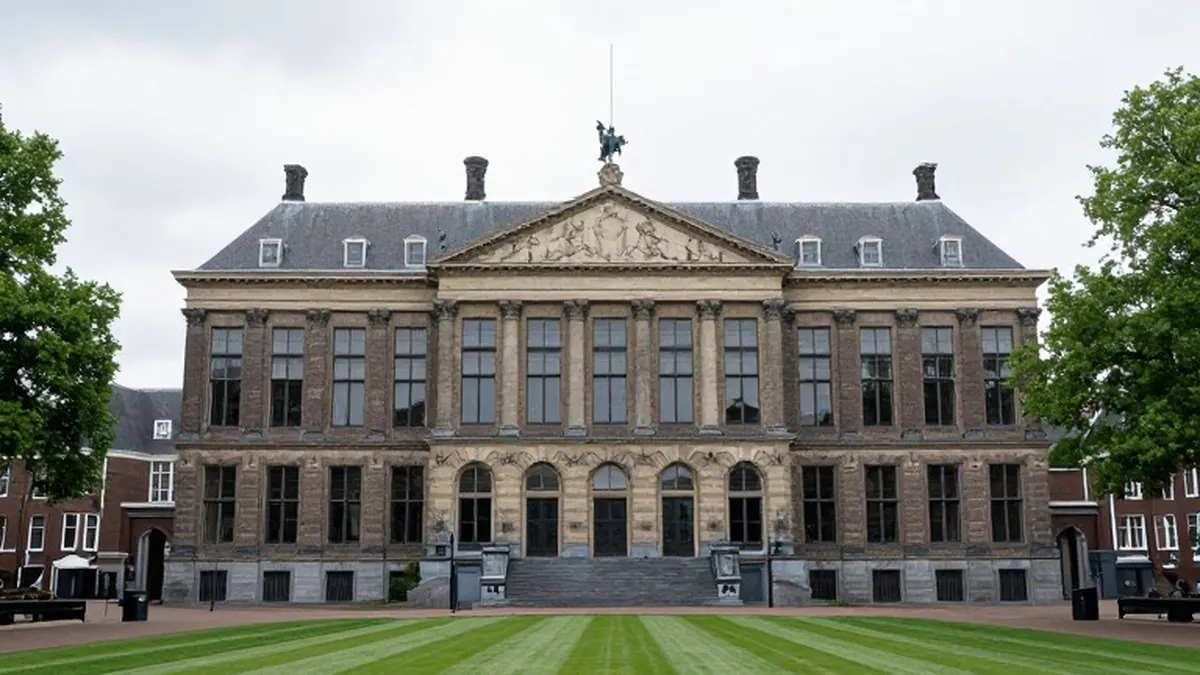
The International Court of Justice has issued a landmark ruling declaring that Myanmar committed genocide against the Rohingya minority. This verdict, delivered in The Hague, marks the first time the UN's top court has found a state guilty of genocide since its founding in 1945. After seven years of deliberation, the decision provides a significant legal milestone for the Rohingya people, who have faced decades of persecution, torture, and killing in Rakhine State.
The ruling has immediate implications for the ongoing case brought by South Africa against Israel regarding the war in Gaza. Legal experts suggest that the Myanmar verdict establishes a clearer framework for determining a government's intent to commit genocide. While the decision does not directly settle the Gaza case, it offers a legal roadmap for how evidence of systematic violence and intent may be evaluated by the court in future proceedings.
South Africa filed its application in December 2023, alleging that Israel was committing genocide against Palestinians in Gaza. In January 2024, the ICJ found the claim plausible and ordered provisional measures to protect civilians. Subsequent orders in March and May 2024 required Israel to ensure food access and halt ground operations in Rafah. Human rights organizations have noted that Israel has not fully complied with these directives.
The death toll in Gaza has risen significantly since the war began. Approximately 75,000 people have been killed, including an estimated 21,000 children. This figure does not include thousands of those missing under the rubble. Since the US-brokered ceasefire agreement announced in October 2025, at least 1,662 more people have been killed. The majority of casualties have been women and children, despite Israel's assertion that it is targeting Hamas rather than civilians.
Legal parallels between the two cases are evident. In the Myanmar case, the court accepted evidence beyond explicit written orders, inferring intent from cumulative patterns of atrocities. Similarly, in Gaza, abundant imagery and testimonies document widespread violence. The ICJ found that Myanmar allowed civilian militias to target Rohingya, failed to punish culpable commanders, and acted with intent to destroy the group and prevent births.
The court ordered Myanmar to provide reparations, including the safe return of Rohingya to their lands, compensation for damages, and medical care. It also emphasized the need to ensure such violations do not recur. In Gaza, 2.1 million people are currently concentrated in a 35 percent area behind Israel's designated yellow line. Israeli officials have made statements describing the conflict in terms that some observers say mirror the language used in Myanmar.
Proving genocide remains legally challenging as it requires demonstrating specific intent to destroy a group in whole or in part. The 1948 Genocide Convention outlines five prohibited acts, including killing, causing serious harm, and preventing births. Myanmar was convicted on four of these counts. The ICJ can only rule on matters between states, meaning it must show that the state itself, not just individual actors, possessed the requisite intent.
Since 2007, the court has become more flexible in its approach. In that year, it ruled that Serbia violated the convention by failing to prevent genocide in Srebrenica but did not commit it itself. Legal scholars note that the current court has shown willingness to find genocide even when the stated aim is self-defense. This shift paves the way for South Africa's case, where Israel has similarly claimed the right to self-defense following the October 2023 attacks.
The ruling may also affect states allied with Israel. The United States, which has already sanctioned the International Criminal Court over warrants for Israeli leaders, is watching the ICJ proceedings closely. US Ambassador Mike Waltz previously criticized jurist Navi Pillay for potentially lowering the legal threshold for proving genocide. Germany, which supported The Gambia's case against Myanmar, is currently facing a lawsuit from Nicaragua over alleged breaches of international law regarding arms supplies to Israel.
The Myanmar verdict has been viewed as a vindication for the Rohingya, with 1.2 million currently in refugee camps in Bangladesh and over 500,000 remaining in Myanmar. For Palestinians, the decision offers hope that their suffering will receive similar international recognition. As South Africa prepares its next submission for November 2027, the legal landscape has shifted, providing a more defined path for assessing the ongoing crisis in Gaza.