Global energy leaders pledge to boost fuel supplies amid market volatility
US, China, and Russia pledge to boost global petrol supplies, but analysts question feasibility due to capacity limits and ongoing war disruptions.
By Amir Bennett ·
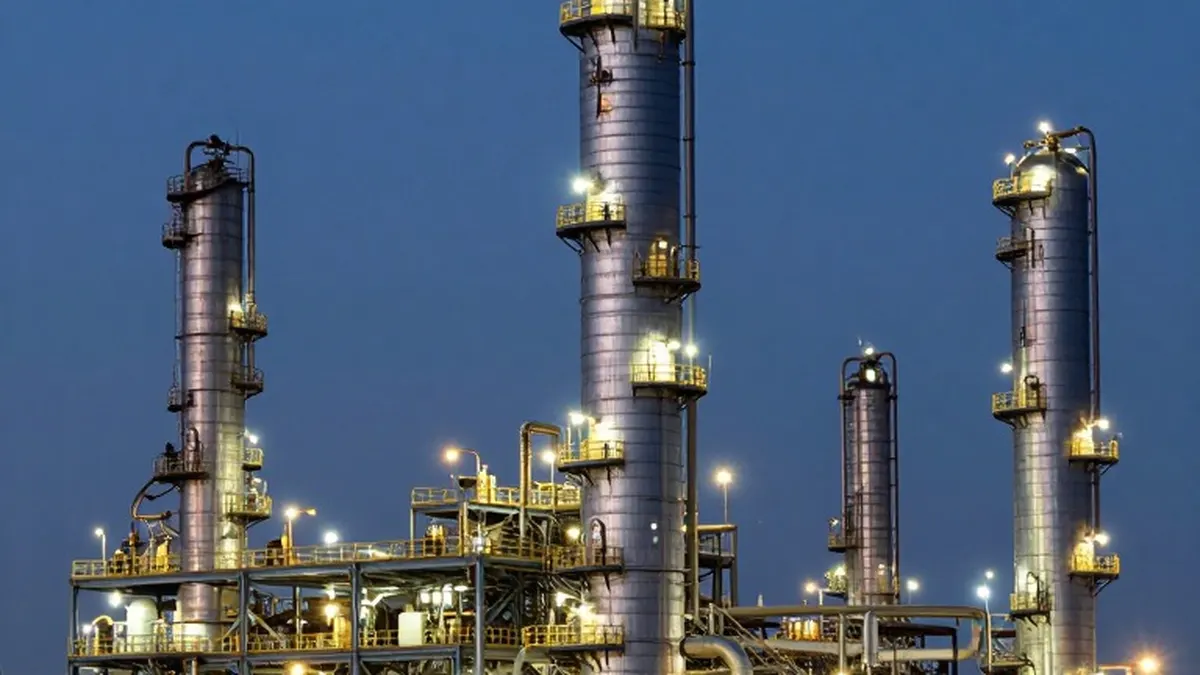
Leaders of the United States, China, and Russia have committed to increasing the production and supply of refined petroleum products. The pledge was made in a joint statement following a trilateral summit held in Shenzhen, China, on Thursday. The three nations aim to stabilize energy flows as ongoing conflicts in Ukraine and Iran continue to disrupt global markets.
US President Donald Trump, Chinese President Xi Jinping, and Russian President Vladimir Putin emphasized the importance of stable energy supplies for all nations. However, analysts remain skeptical about the practicality of this commitment given the current operational constraints facing each country's refining sector.
Hamad Hussain, a senior climate and commodities economist at Capital Economics, described the trilateral statement as political noise rather than a concrete step toward boosting fuel supplies. Frederic Schneider, a nonresident senior fellow at the Middle East Council on Global Affairs, noted that such announcements are often designed to placate consumers, pointing out that previous efforts like the US-Russian diesel deal have not yielded significant results.
China and the United States are the world's largest oil refiners by capacity, followed by Russia and India. China possesses roughly 18.5 to 18.83 million barrels per day of refining capacity. However, its operations depend heavily on crude oil imports, which were significantly disrupted by the US-Iran conflict in the Strait of Hormuz. Data from the US Energy Information Administration indicates that Chinese crude imports fell by 2.1 million barrels per day in the second quarter of 2026 and by an additional 0.8 million barrels per day in the third quarter.
The United States had an operable crude oil distillation capacity of approximately 18.16 million barrels per day as of January 1 this year. US refineries have been operating at near-full capacity, with utilization rates averaging more than 95 percent between May and September, the highest for those months since 1998. To address capacity gaps, US Energy Secretary Chris Wright stated that the department is discussing the reopening of various refineries. Valero Energy recently agreed to acquire the LyondellBasell Industries refinery near Houston, Texas, which could add 165,000 barrels per day of processing capacity by the end of 2027.
Russia faces significant challenges due to continued Ukrainian drone strikes on its energy infrastructure. The country has roughly 6.5 million barrels per day of refining capacity, but throughput dropped to 3.8 million barrels per day in June, the lowest level in over two decades. In the first eight months of 2026, a Russian refinery was hit on average once every three days. These attacks have slashed combined crude processing volumes by 45 percent since late October, prompting several regions to limit fuel sales to prevent hoarding.
India, with a refining capacity of about 5.36 million barrels per day, is also heavily dependent on crude oil imports that have been affected by blockades in the Strait of Hormuz. Meanwhile, China's crude oil arrivals recovered in October, reaching 9.88 million barrels per day, up from 9.03 million in September. This marks the highest volume since March, shortly after the war began. Although China has some spare refinery capacity, low inventories of petrol and diesel mean that increased output may be used to replenish domestic reserves rather than for export.
The decline in Russian refining activity has had a global impact, contributing to record-high diesel prices in September. Despite an October agreement to allow some Russian diesel exports, traders have refused to take the shipped fuel. Analysts suggest that the return of refined output from the Middle East will be crucial for lowering global fuel prices, as current supply constraints remain severe.