Rohingya refugees react with tears and hope to ICJ genocide ruling
The International Court of Justice found Myanmar guilty of genocide against the Rohingya, sparking emotional celebrations in Bangladesh camps despite ongoing hardships.
By Youssef Carter ·
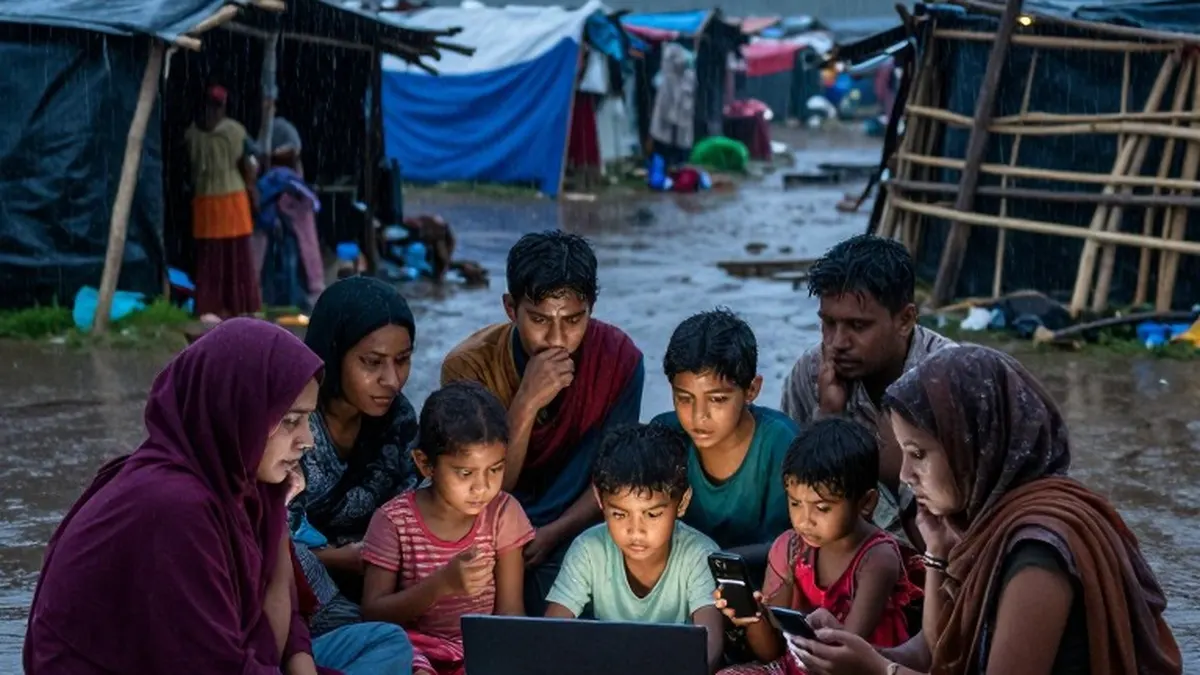
In the crowded shelters of Cox’s Bazar, Bangladesh, Rohingya refugees gathered around mobile phones and laptops to await a historic decision from the International Court of Justice. Poor internet connectivity often interrupted the live broadcast, creating moments of tension and uncertainty. However, when headlines confirmed that the court had found Myanmar responsible for committing genocide, the atmosphere shifted rapidly from anticipation to overwhelming emotion.
Umme Ruman, a resident of Camp 1E, described the moment she saw the news on Facebook. Overwhelmed, she rushed to hug her sister-in-law, who was cooking nearby. Before she could explain the significance of the verdict, Ruman broke down in tears. She noted that this was the first time the world had formally acknowledged the suffering of her community, calling the decision proof of their endurance rather than just a legal outcome.
The landmark judgment, delivered on Thursday, determined that Myanmar was responsible for the genocide committed during brutal military operations in 2017. The court found that more than 10,000 Rohingya had been killed during this period. The case was brought before the ICJ by The Gambia, a small West African nation that acted as a party to the 1948 Genocide Convention. Although The Gambia was not directly affected by the violence, it had the legal standing to pursue the case, a position the court upheld in 2022.
Across the refugee camps, people followed the announcement through various digital platforms. Eighteen-year-old Mohammad Rehan watched the proceedings with friends and a community teacher. He observed a mix of reactions, with some women crying and others praying to Allah. For Rehan, the ruling offered a glimmer of hope that it might open the door for the community to return to their homeland. He expressed that even just imagining that possibility brought him immense happiness.
The news quickly spread through the blocks, with many people celebrating while elderly refugees discussed the role of The Gambia in bringing the case to the international stage. Rehan’s mother was particularly delighted, telling him that they had won and that they would eventually be able to return to their homeland. This sentiment of potential repatriation resonated with many refugees who have spent nearly a decade waiting for justice.
However, the celebrations took place against a backdrop of difficult living conditions. On Thursday, rain fell over the camps as Cyclone Akvan approached the Bay of Bengal, adding to the discomfort of families living in cramped shelters. This weather served as a reminder that while the verdict recognized their suffering, it did not immediately change the daily realities of life in the camps.
Nurul Amin, a Rohingya youth, expressed mixed emotions. While he was happy that the court recognized the genocide, the announcement also triggered painful memories of the 2017 military operation. He recalled the violence he experienced and the home he was forced to leave behind. Similarly, activist Rohimullah described the moment as one of relief and renewed hope, but noted that the judgment could not bring back lost loved ones or erase the memories of their darkest days.
Experts weighed in on the implications of the ruling. Nasir Uddin, an anthropology professor at the University of Chittagong, stated that the decision was essential for establishing the concept of global justice. He argued that in the 21st century, such a massive genocide occurring before the world's eyes required this level of accountability to uphold liberal democratic values.
Michael Kugelman, a senior fellow at the Atlantic Council, suggested that the ruling would impact negotiations between Bangladesh and Myanmar. He believed that Dhaka would now require stronger assurances from Myanmar regarding the safe return of refugees. With an international court confirming the experience of genocide, the dynamics of repatriation talks are likely to shift, with Bangladesh seeking more robust guarantees before allowing large-scale returns.
For the Rohingya community, the hope of going home remains central to their aspirations. They seek accountability for the atrocities, the restoration of their citizenship and rights, and a dignified return to Myanmar. Nurul Amin expressed a desire for the international community to address the political causes of their displacement, including the end of military dictatorship and discrimination. He concluded that the community hopes this judgment will lead to a future where they can return home with their rights and dignity intact.