Houthi Missile Strike Damages Saudi Arabia's Tallest Skyscraper
The PIF Tower in Riyadh sustained significant structural damage from a Houthi missile, marking a new escalation in the regional conflict.
By Youssef Carter ·
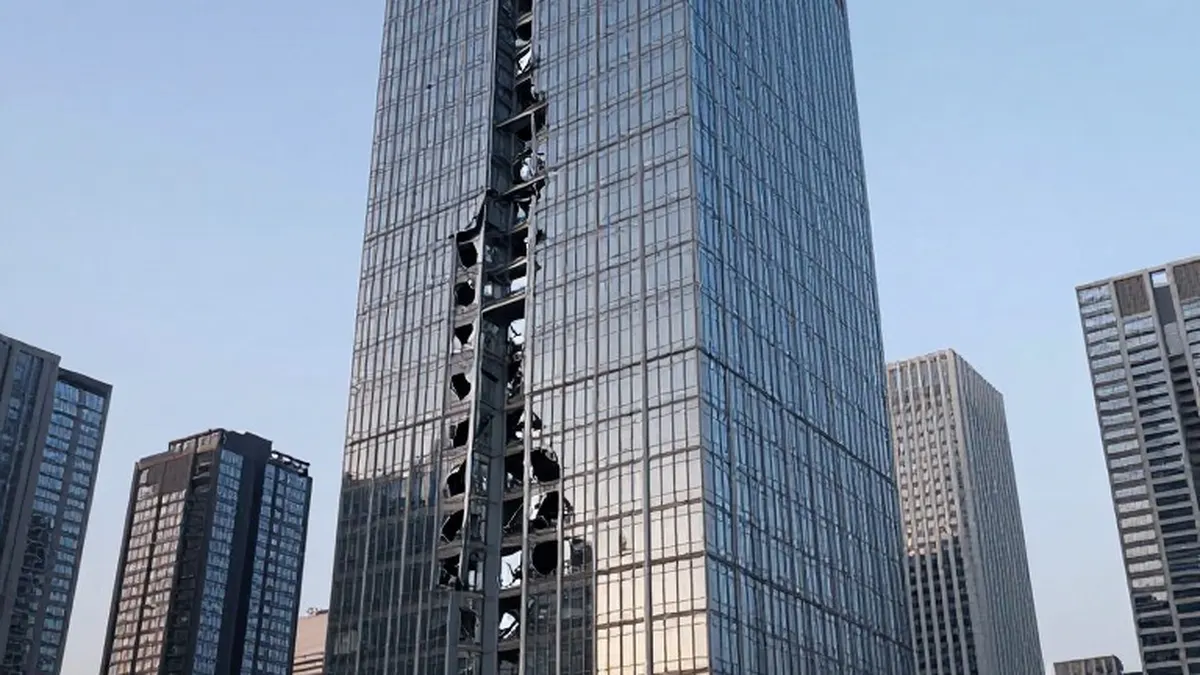
Saudi Arabia's tallest skyscraper, the PIF Tower, sustained material damage following a Houthi missile strike on Thursday, November 19. The building serves as the headquarters for the Saudi sovereign wealth fund and is located in the heart of Riyadh's financial district. Saudi civil defense authorities confirmed that several floors of the 80-story structure were affected, along with nearby buildings in the area.
State news agency SPA reported that no injuries were recorded in the incident. The strike caused windows to shatter across seven to eight floors and bent sections of the tower's metal facade. Three sources familiar with the matter indicated that the building was hit directly by a Houthi missile. The financial district was subsequently closed to visitors while authorities assessed the damage.
The Houthi group stated that they had targeted Riyadh's financial center twice on Thursday, with attacks occurring at dawn and again in the evening. They also claimed strikes on King Khalid International Airport in Riyadh, the Khamis Mushait airbase in the south, and the SADAF Petrochemical Company in the Eastern Province. However, the Saudi government had not immediately confirmed these additional strikes as of the latest reports.
This incident marks the second time in under two weeks that a landmark in the city's financial district has been damaged by Houthi attacks. On November 8, a strike hit the building of state oil company Aramco. The Saudi-led coalition fighting the Houthis announced that it had dealt with a missile threat directed toward Riyadh, noting that debris had landed in the area. The Houthis did not issue an immediate statement specifically regarding the PIF Tower strike.
The kingdom's foreign ministry responded by reserving the right to take all necessary measures to defend its sovereignty and protect its citizens and national assets. The militant group has been launching attacks on Saudi airports and oil infrastructure since the Yemen civil war intensified in July, a period that coincided with the US-Iran war.
In Yemen, a Houthi-run health ministry spokesperson reported that 15 people were killed in airstrikes on Thursday. A strike on a rest stop in the port city of Mokha killed 10 people and wounded nine, while another attack in Taiz province targeted workers repairing a road, resulting in five deaths and five injuries. The spokesperson attributed the attacks to Saudi-backed forces.
The regional conflict continues to disrupt global energy markets. Iran announced that two supertankers carrying over four million barrels of crude oil caught fire after striking mines in the Strait of Hormuz. This waterway, which typically carries about a fifth of global oil and liquefied natural gas supplies, has seen reduced shipping activity due to the wider conflict.
Diplomatic efforts to resolve the tensions have shown mixed results. In a historic trilateral meeting in Shenzhen, China, US President Donald Trump, Chinese President Xi Jinping, and Russian President Vladimir Putin held their first-ever sit-down summit. The three leaders released a joint statement agreeing to increase the production of refined oil products for the benefit of all nations, despite international sanctions on Russian oil sales.
Meanwhile, in the United States, Senate Republicans rejected legislation that would have directed President Trump to end the war in Iran or seek congressional approval to continue it. This decision came weeks after the president faced bruising defeats in the midterm elections.
In Iraq, the government appeared to reach a compromise with the Iran-backed Kataib Hezbollah militia, which had been accused of smuggling oil. These developments underscore the complex web of alliances and conflicts currently shaping the Middle East landscape.