Satellite Data Highlights Gaps in Azerbaijan's Nagorno-Karabakh Resettlement Push
New imagery shows extensive construction in Nagorno-Karabakh, yet few displaced residents have returned despite Baku's ambitious targets and billions in investment.
By Carolina Barrett ·
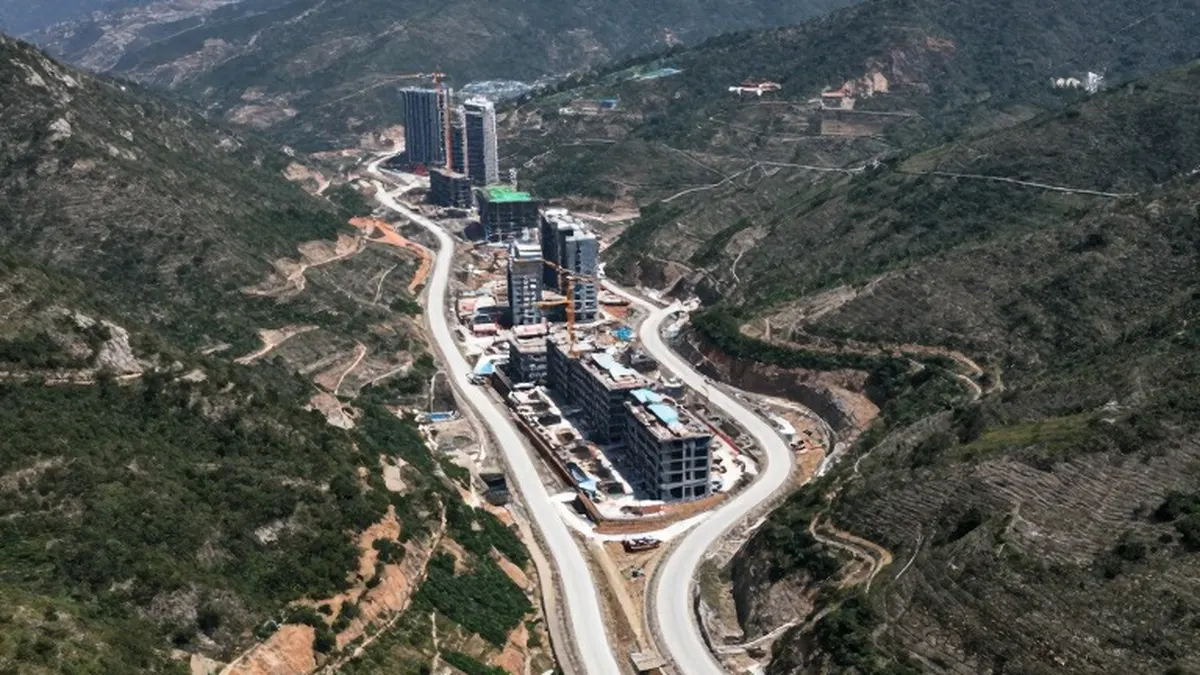
Recent satellite imagery of the Nagorno-Karabakh region and its surroundings reveals a massive scale of ongoing construction activity. This physical transformation contrasts sharply with the reluctance of many displaced locals to return to the war-affected territory. The region, now fully under Azerbaijani control following military offensives that concluded in 2023, is undergoing significant redevelopment.
Baku has invested approximately $15 billion in rebuilding these areas to support its "Great Return" program. This initiative aims to resettle Azerbaijanis who fled the First Karabakh War between 1988 and 1994. The government set a target to resettle 140,000 internally displaced people, or IDPs, in the recaptured territories by the end of 2026.
However, with the deadline approaching, officials in Baku state that only 41,000 individuals have actually returned. Farid Guliyev, an associate professor of political science at the American University in Dubai, suggests that the original goal was likely overly ambitious. He points to ongoing complications, such as the presence of landmines, as well as various social factors that complicate the resettlement process.
Guliyev notes that the targets do not fully account for how much the lives of displaced people have changed over the past three decades. Many IDPs, particularly younger generations, have become integrated into urban life in Baku and other cities. Consequently, they may be hesitant to uproot themselves again to move to the recaptured territories.
Aytaj Amirjanli, an IDP who recently moved back to Nagorno-Karabakh, shared her experiences with RFE/RL's Azerbaijani Service in September. She reported that many of those who did return are leaving once more after struggling to find employment. "Our refugees and internally displaced people are all unemployed. Most have already locked up their homes and gone back to Baku," she said, adding, "if I can't put food on the table there, what am I supposed to do?"
Financial considerations also play a significant role in the decision to return or stay. Guliyev explains that many IDPs are reluctant to lose state handouts, which include monthly food allowances of around $35 per person. "Returning may mean losing some of these benefits, while employment opportunities in the recovered territories remain uncertain," he said.
The demographic landscape of the region has shifted dramatically. Almost the entire ethnic Armenian population, which numbered around 100,000 prior to 2023, fled to Armenia after Baku launched its military offensive in September of that year. The region is internationally recognized as part of Azerbaijan, though it had been populated predominantly by ethnic Armenians until the recent conflict.
In addition to housing and infrastructure, Baku has undertaken massive development projects. These include the construction of 1,500 kilometers of new roads and the demining of approximately 22 percent of the recaptured territories. These efforts are part of a broader strategy to make the area habitable and attractive for returnees.
However, the rebuilding process has also sparked controversy. Baku has faced outrage over the demolition of historic churches and a cathedral in Khankendi, as well as entire villages. Most notably, a former settlement known as Dasalti was completely erased in early 2023. Today, a mosque stands on the site of the village, which was known as Karintak in Armenian.
Addressing concerns about the loss of heritage, Elnara Akimova, a member of the Azerbaijani parliament, responded to reports of the Holy Mother of God Cathedral's demolition in early 2026. She told RFE/RL's Azerbaijani Service that Baku "protects religious and historical monuments on its territory as a state policy, and has never intended to destroy religious heritage."