Ancient Maya stucco heads reveal new insights into Guatemala's artistic heritage
A significant collection of life-sized stucco portraits from the Maya period has been unveiled in Guatemala, showcasing advanced artistic techniques and societal values.
By Amir Bennett ·
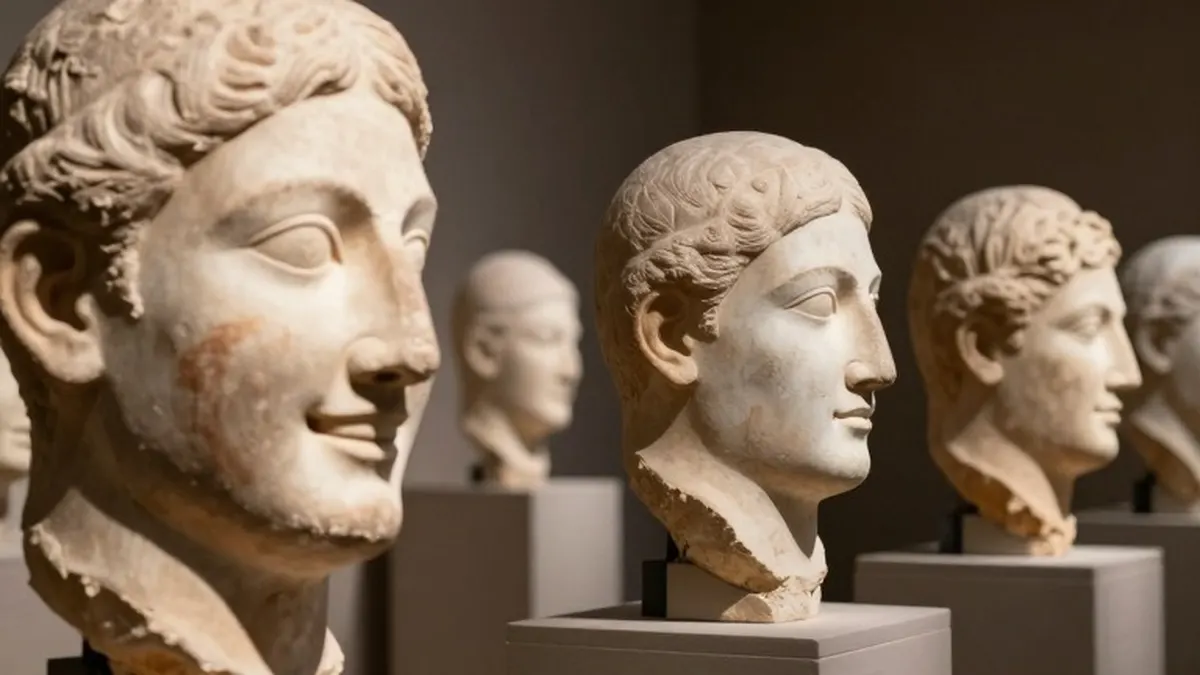
Guatemala has revealed a series of expressive, life-sized stucco heads crafted during the Maya period. These sculptures provide a rare glimpse into the artistic practices of ancient civilizations and represent a unique concentration of such works from the broader Maya world.
The pieces date back to the seventh and eighth centuries. They are part of a larger collection discovered at the Mirador Basin archaeological site in northern Guatemala. Excavations at this location have continued over the past decade, yielding artifacts that have impressed researchers due to their high quality of preservation, artistic detail, and the sheer volume of the collection.
Douglas Mauricio, an archaeologist with the Mirador Basin Project, noted the rarity of this find. He stated that there is no other known example in the Mayan world where such a large number of sculptures has been recovered from a single structure.
Major Maya cities began to rise in prominence roughly 3,000 years ago across a wide area that includes present-day southern Mexico and several Central American nations. This era was characterized by significant advancements in mathematics, astronomy, and the visual arts.
Lilian Vega de Zea, the restoration director for the Mirador Basin Project, highlighted that the elaborate carvings demonstrate the Maya people's mastery of diverse artistic skills. The faces depicted in the sculptures show a range of emotions, from scrunched foreheads to broad smiles, indicating a sophisticated understanding of human expression beyond their mathematical and astronomical achievements.
According to Vega de Zea, the complexity of the work points to advanced technological capabilities. She explained that the use of colors required a complex process involving multiple individuals. Some team members were responsible for preparing the pigments, others mixed the stucco, and a specific person served as the physical model for each head.
The sculptures are believed to represent important figures within Maya society. Vega de Zea suggested that these portraits served as messages to the community, depicting individuals who held a certain level of authority.
The discovery also offers new information about the later periods of Maya occupation at El Mirador. Mauricio explained that a smaller population returned to the site centuries after its Preclassic peak. This later group maintained the earlier sculptures in good condition, indicating a continued reverence for their ancestors.
Mauricio added that these later inhabitants continued to preserve, protect, and hold their Preclassic ancestors in high regard. This ongoing care for the artifacts provides valuable context for understanding the long-term cultural significance of the Mirador Basin.