Iraqi Forces Enter Jurf al-Sakhar Following Two-Month Negotiation With Kataib Hezbollah
Iraqi forces have entered the Kataib Hezbollah stronghold of Jurf al-Sakhar after a two-month negotiation process concluded in a deal that limits the group’s control over the area.
By Amir Bennett ·
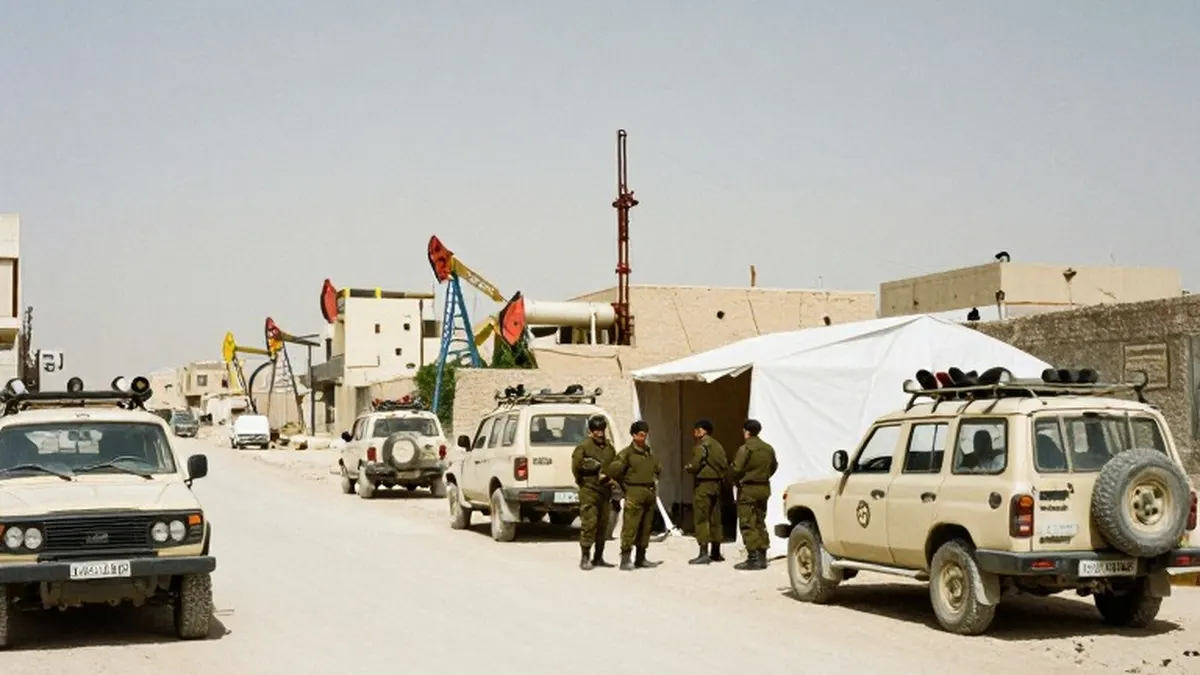
Iraqi security forces deployed to Jurf al-Sakhar on Friday, marking a significant shift in control over the town in Babil province. The location, situated approximately 60 kilometers southwest of Baghdad, has served as a primary stronghold for Kataib Hezbollah, a powerful armed group aligned with Iran. The deployment followed the sealing of a compromise agreement the previous day, which dictates that the group will relocate to other parts of the country.
The move is understood to have been driven by sustained pressure from the United States and its Gulf allies. The government had announced on Monday that it intended to assume control of the area after an investigation raised suspicions that Kataib Hezbollah had stolen hundreds of millions of dollars worth of Iraqi oil. These allegations stemmed from the operation of illicit refineries within the town.
Initially, Baghdad gave the group, which is believed to command thousands of trained fighters, a deadline of Friday to vacate the town. However, the deal reached on Thursday extends the timeline, expecting the withdrawal to be completed within a month. While Kataib Hezbollah has denied the accusations of oil theft, analysts suggest the push is a strategic effort to cut off the financial resources of armed factions that have resisted integration into the state apparatus. Additionally, the government faces external pressure to diminish Iran’s influence in Iraq.
Prime Minister Ali al-Zaidi has carefully managed the situation to contain the group without triggering a direct confrontation. Addressing the government forces entering the town on Friday, he emphasized that the operation was not a war. He told the troops, “Everyone present there are your brothers,” adding that they were the sons of the nation and their blood was shared with the state. Despite this diplomatic tone, he insisted that his decision to restrict weapons to state control was final.
Under the terms of the compromise, a combined force will provide protection for oil pipelines in the area. This force includes an Iraqi army brigade, a Federal Police battalion, and an Energy Police regiment. Two brigades from the Popular Mobilisation Forces Commission, which comprises armed groups within Iraq’s official security structure, will also participate in the security arrangements.
Lieutenant General Ahmed Hatem Hamid announced on Friday that a control headquarters had been established in Jurf al-Sakhar. According to the Iraqi News Agency, the Federal Police will oversee this facility. The establishment of this command center represents a tangible step in the government’s effort to reassert authority in a region long dominated by non-state actors.
Security and strategic analyst Fadel Abu Raghif, based in Baghdad, noted that the entry of security forces followed lengthy and delicate discussions. He described the process as involving in-depth negotiations and a tug of war that lasted approximately two months. The complexity of the talks was underscored by the visit of Esmail Qaani, commander of Iran’s Islamic Revolutionary Guard Corps’ Quds Force, who traveled to Iraq earlier in the week to help defuse tensions and finalize the deal.
Kataib Hezbollah has maintained a large presence in Jurf al-Sakhar for over a decade, having played a key role in recapturing the town from ISIL. The group’s departure is expected to reopen an area that the government says has been closed to the public for about 12 years. This development signals a potential new chapter in Iraq’s efforts to consolidate state control over strategic economic zones and manage the influence of its numerous armed factions.
The deployment highlights the ongoing challenges faced by Baghdad in balancing domestic security needs with international expectations. As the forces settle into the town, the coming weeks will be critical in testing the durability of the agreement. Observers will watch closely to see if the one-month withdrawal deadline is met and whether the new security arrangements effectively secure the oil infrastructure without reigniting friction between state forces and the armed groups.