Iraqi Government and Militia Reach Compromise in Jurf al-Sakhar Standoff
A tense standoff between the Iraqi government and the Iran-aligned Kataib Hezbollah militia over the Jurf al-Sakhar region has de-escalated following a reported agreement allowing state forces to enter the area.
By Youssef Carter ·
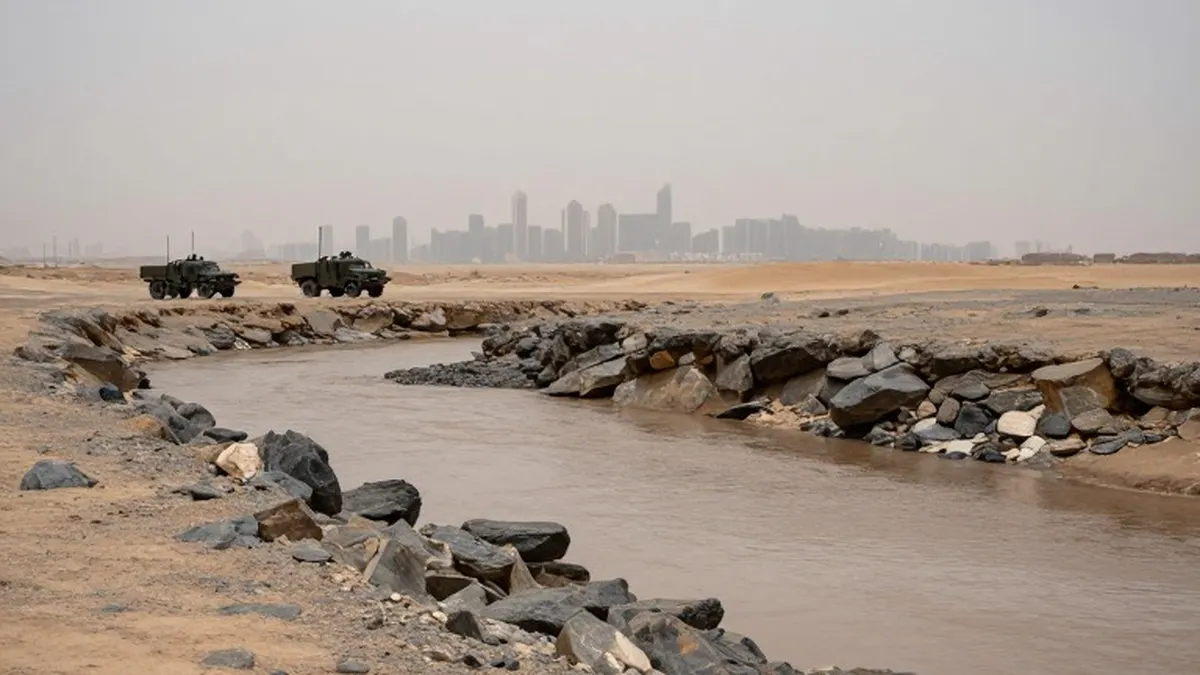
Jurf al-Sakhar, a region located approximately 50 kilometers south of Baghdad, has long been a source of speculation and tension. For around twelve years, the area has been under the control of Kataib Hezbollah, a Shiite militia closely allied with Iran. During this period, no Iraqi government troops or news media were permitted inside, leading to widespread rumors about secret prisons, mass graves, and extensive criminal activities such as oil smuggling.
The area, formerly home to an estimated 89,000 residents, was largely displaced after the rise of the Islamic State in 2014. Kataib Hezbollah seized control of the territory and renamed it Jurf al-Nasr, which translates to bank of victory. Tens of thousands of displaced residents, predominantly Sunni Muslims, have been unable to return, and the zone has been described as heavily militarized.
Recent events have challenged the militia's dominance. An early November report indicated that Kataib Hezbollah had smuggled hundreds of millions of dollars in state-owned oil from pipelines in the region since 2021. Although the group denied these allegations, Prime Minister Ali al-Zaidi's government acted on the findings by making several arrests and issuing an ultimatum for the militia to withdraw by November 20.
Kataib Hezbollah rejected the deadline, with a spokesperson stating the group would not withdraw even over their dead bodies. In response, Prime Minister al-Zaidi ordered state security forces to surround the area, while the militia reportedly brought in reinforcements. Observers have characterized this confrontation as one of the riskiest between an Iraqi government and Iranian-backed militias in over two decades.
Ulf Laessing, head of the Syria and Iraq project for Germany's Konrad Adenauer Foundation, noted that the standoff serves as a political signal that the prime minister intends to integrate militias into the state. However, he warned that navigating this situation requires careful maneuvering due to the complex political landscape.
The conflict is rooted in long-standing tensions within Iraq, which is caught between its US allies and its Iranian allies. Under the pressure of the US and Israel's war with Iran, there has been increased demand for Iraq to disarm Iranian-aligned groups. Prime Minister al-Zaidi has set a deadline of next June to bring all weapons under state control.
Tensions escalated further this week when the prime minister announced a new security plan involving other Popular Mobilization Forces members, state security forces, and police. Kataib Hezbollah rejected this plan, prompting analysts to suggest that the government was moving beyond rhetoric to end the militia's autonomous control.
Despite the government's push, the situation remains complicated by internal political divisions. Prime Minister al-Zaidi was nominated by the Coalition Framework, a bloc that includes representatives of the Popular Mobilization Forces, and Kataib Hezbollah's political party is part of this coalition. Reports indicate that some senior officials prefer a gradual withdrawal to federal forces, while others within the militia favor handing the territory to specific Popular Mobilization Forces brigades.
Late on Thursday, Reuters reported that anonymous officials confirmed an agreement allowing government forces to enter the area on Friday. Laessing described this compromise as a positive outcome that avoids violence, even if it does not fully meet the prime minister's initial hopes.
Hayder al-Shakeri, a research fellow at Chatham House, explained that while the Iraqi military holds a resource advantage, a conventional victory would not be easy. He noted that the militia could impose costs through asymmetric attacks and political pressure. The outcome of this compromise will likely influence how other militias operate, with the core issue being whether a faction can maintain control over territory and economic activity beyond government oversight. The most probable result is the removal of Kataib Hezbollah's monopoly rather than a complete withdrawal of Popular Mobilization Forces, potentially allowing displaced residents to return home.