Iranian Officials Advocate Pre-emptive Strikes and Broader Conflict Scope
Amidst rising tensions, Iranian voices are calling for military action against US naval assets and warning that future conflicts may extend to European territories.
By Carolina Barrett ·
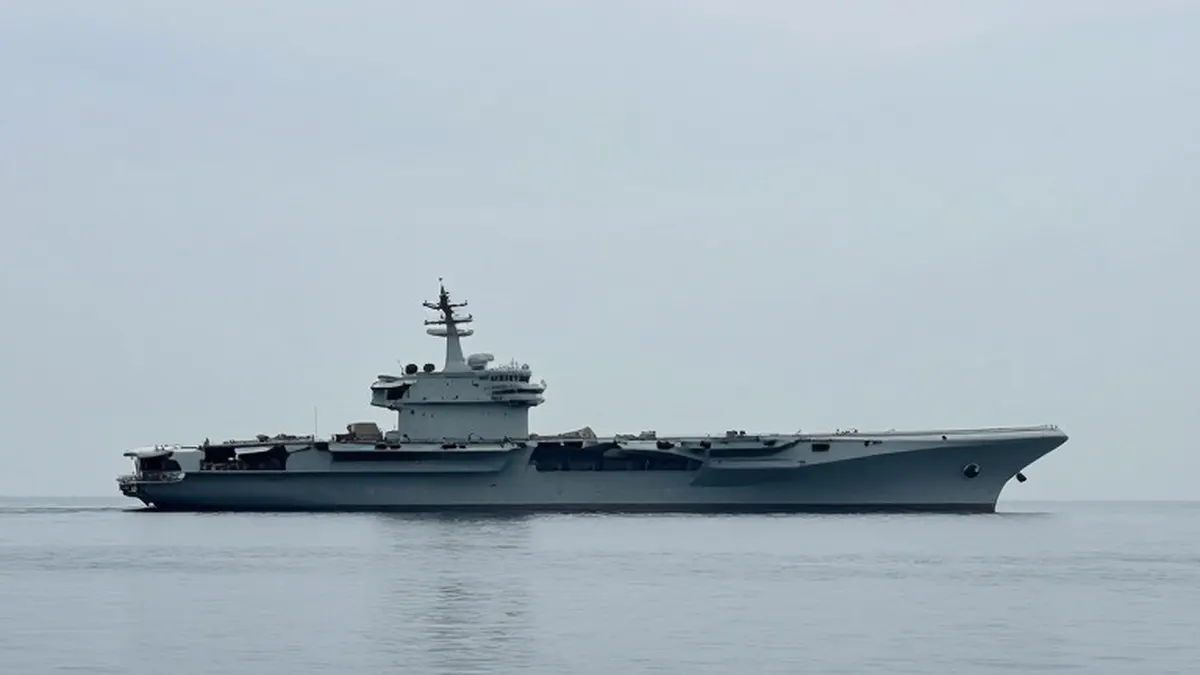
Iranian political discourse is shifting toward more aggressive postures as parliament members and media outlets debate the best strategies to counter perceived threats from the United States and Israel. A prominent member of parliament has suggested that Tehran should consider pre-emptive military actions to break the current stalemate in relations with Washington.
Amir Hayat-Moqaddam, a member of the National Security Commission, argued in an interview with the 7 Sobh daily that striking American warships is an absolute necessity. He specified that vessels located 700 to 800 kilometers east of the Strait of Hormuz should be targeted to damage them and force them out of the region. Hayat-Moqaddam described the current situation as a deadlock of neither war nor peace and stated that Iran should have already carried out such attacks to demonstrate its strength.
The MP dismissed the likelihood of successful diplomatic talks with the United States. He noted that negotiations are often fruitless, citing two previous instances where Iran was attacked during ongoing discussions. In his view, talks serve primarily to reassure domestic and international audiences that Tehran is not seeking conflict, rather than to achieve tangible results.
In a separate development, a prominent water scientist has criticized a recent report by the New York Times. The article suggested that some of Iran’s dams may have been constructed to support underground missile facilities. Kaveh Madani, director of the United Nations University Institute for Water, Environment and Health, who was quoted in the report, pushed back on the connection. He wrote on social media that spatial proximity does not equal causality and called the narrative reductionist and sensational.
Madani argued that this line of reasoning could have dangerous consequences for civilian water infrastructure. He further noted that even those who attacked Iran had not previously made such claims linking dams to missile programs. Parliament Speaker Mohammad Baqer Ghalibaf also criticized the report, suggesting that if this logic were applied to the US and Israel, their military bases near dams, ports, and power plants would also be considered dual-use facilities.
Tensions are also rising regarding nuclear inspections. The conservative daily Jam-e Jam has accused the International Atomic Energy Agency of facilitating espionage for the US and Israel. This criticism follows a confidential IAEA report circulated to member states on Friday, which highlighted difficulties in accessing Iran’s nuclear facilities, particularly the Isfahan enrichment site, and the agency’s inability to verify enriched uranium stockpiles.
Abdolreza Hadi-Zadeh Naeini, the political desk editor at Jam-e Jam, described the IAEA’s report as a political maneuver designed to allow spies to operate under the cover of inspectors. He argued that the agency ignored the impact of the first round of war in June 2025, which had prevented a planned inspection of the Isfahan facility. The newspaper also called for Tehran to withdraw from the Non-Proliferation Treaty and revise its nuclear doctrine.
Furthermore, the conservative daily Farhikhtegan has warned that a new conflict with the US and Israel could expand to include European countries. Quoting Mohsen Rezaei, head of the Supreme National Security Council, the paper stated that Iran would attack any point from which aggression originates, a description that specifically includes Europe.
The daily identified specific military bases in Britain and Cyprus as direct operational targets and listed facilities in Portugal, Germany, France, Italy, and Greece as providing logistical support. Farhikhtegan suggested that European nations opposing US and Israeli operations, such as Spain and Bulgaria, might avoid being targeted. This warning follows similar statements by other Iranian dailies, which have recently identified US bases across Europe as potential targets in a renewed conflict.