COP31: Africa seeks tripled climate finance while Europe urges focus on existing pledges
At the UN climate summit in Turkey, African nations are demanding increased funding for adaptation, but European leaders argue that current commitments must be delivered before new targets are set.
By Youssef Carter ·
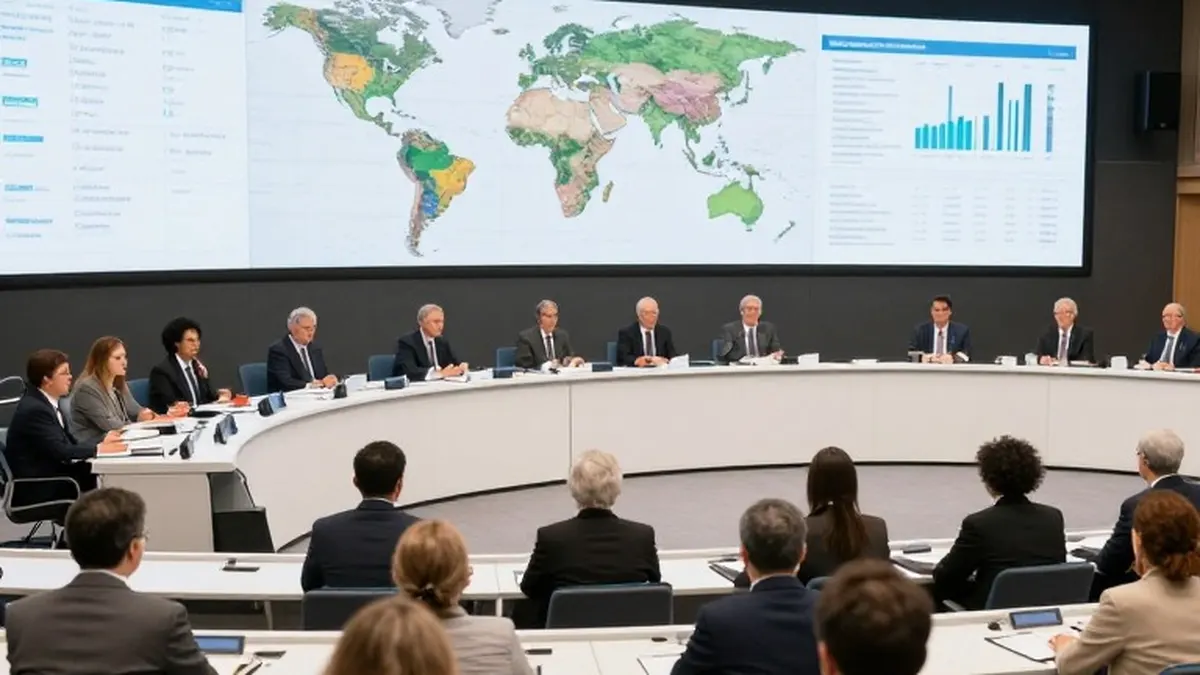
The ongoing United Nations climate summit, COP31, is currently taking place in Turkey, where a significant debate has emerged over financial support for vulnerable nations. African representatives are advocating for a tripling of adaptation finance by 2035. This proposal calls for annual funding to reach levels far above the current baseline, which is reported to be around 40 billion dollars. The African Group of Negotiators argues that developed countries committed to this baseline by 2025, though the exact interpretation of that commitment remains a point of contention among delegates.
The urgency of the discussion is underscored by the immediate suffering of communities across the continent. In Uganda's Karamoja region, severe droughts that began in April have devastated rain-fed agriculture. Elijah Lobur, a 44-year-old farmer, reported that his family now survives on a single meal per day. Local officials indicated that over 90% of crops in the area have failed. Lobur noted that even wild plants traditionally used for food have withered, illustrating the depth of the current crisis.
In Malawi, the challenges are equally severe but varied. Mathews Nkhambala recently experienced the destructive power of flooding in Chikwawa district. Just months after Tropical Cyclone Freddy caused widespread damage, new floods displaced residents and destroyed property. Nkhambala lost his home, a harvest of sorghum, and part of his farmland. The trauma of the event was so significant that his children stopped attending school for several months. Now, facing a lack of rain, he fears another failed harvest.
A government assessment following Cyclone Freddy revealed that Malawi has endured more than 50 storm and flood-related disasters since 1980. Despite these recurring events, Malawi is one of 23 African countries that have not yet submitted National Adaptation Plans to the UN climate convention secretariat. These plans are designed to detail specific climate risks and help nations secure necessary funding. Experts suggest that without them, the process of obtaining financial aid becomes considerably more difficult.
Milton Lorpia, a representative of the Warrior Squad Foundation in Uganda, highlighted the impact of this planning gap. He stated that while cyclical droughts have been a known issue for decades, the lack of an action plan has left communities unprepared. He believes that the existence and implementation of such a plan would have significantly helped mitigate the current suffering.
The European Union, a major provider of climate finance, has taken a different stance. Darragh O'Brien, who leads the EU delegation at COP31, stated that the priority should be ensuring that already pledged funds are deployed effectively rather than setting new targets. He acknowledged that developing nations face hurdles in accessing these funds and that the process requires improvement. He emphasized that the EU is not arriving at the summit with new capital but is focused on the deployment of existing commitments.
Wopke Hoekstra, the European Commission's climate commissioner, supported this view. He argued that for vulnerable nations, having money in the bank without it reaching the ground is meaningless. Hoekstra noted that the EU has provided 30 billion dollars of the 100 billion dollars committed by developed nations in recent years. He called for other wealthy countries to increase their contributions to meet the collective goal.
The scale of the financial gap is substantial. According to the UN's Adaptation Gap Report, sub-Saharan Africa requires approximately 51 billion dollars annually for adaptation, while the Middle East and North Africa need 112 billion dollars. Globally, developing countries are projected to need 300 billion dollars per year by 2035. However, they received only about 10% of that amount from developed nations in 2024. Power Shift Africa, a think tank based in Nairobi, projects that climate-related losses in Africa will cost 440 billion dollars between 2020 and 2030.
David Abudho, a climate justice lead at Oxfam, explained that the delay in submitting National Adaptation Plans is often due to other crises, such as debt distress and economic pressures. Sheila Apiny from ActionAid described this as a vicious cycle where a lack of support prevents planning, and a lack of planning makes funding harder to secure. Amos Wemanya from Power Shift Africa added that this forces governments to focus on emergency relief rather than long-term prevention, such as early warning systems and resilient agriculture.
African negotiators acknowledge the utility of these plans but argue that their absence should not be a reason to deny funding. Mahlet Eyassu Melkie, a senior adviser to Ethiopia's COP32 presidency, stated that adaptation needs are based on scientific assessments and vulnerability, not just on the submission of planning documents. Fred Njehu from Greenpeace Africa agreed that missing plans create a functional barrier to funding, but Sheila Apiny noted that even countries with completed plans have not received sufficient funds for implementation. In Kenya, concrete sand dams have helped communities store water during dry periods. Back in Uganda, Lobur hopes for similar irrigation solutions, fearing that without them, his family may face a fate similar to the famine his grandmother experienced in 1982.