Xi, Trump, and Putin hold historic trilateral summit in Shenzhen
The leaders of China, the US, and Russia convened for an unprecedented meeting, resulting in a peace declaration that focuses on UN reforms and energy security while omitting specific details on the war in Ukraine.
By Youssef Carter ·
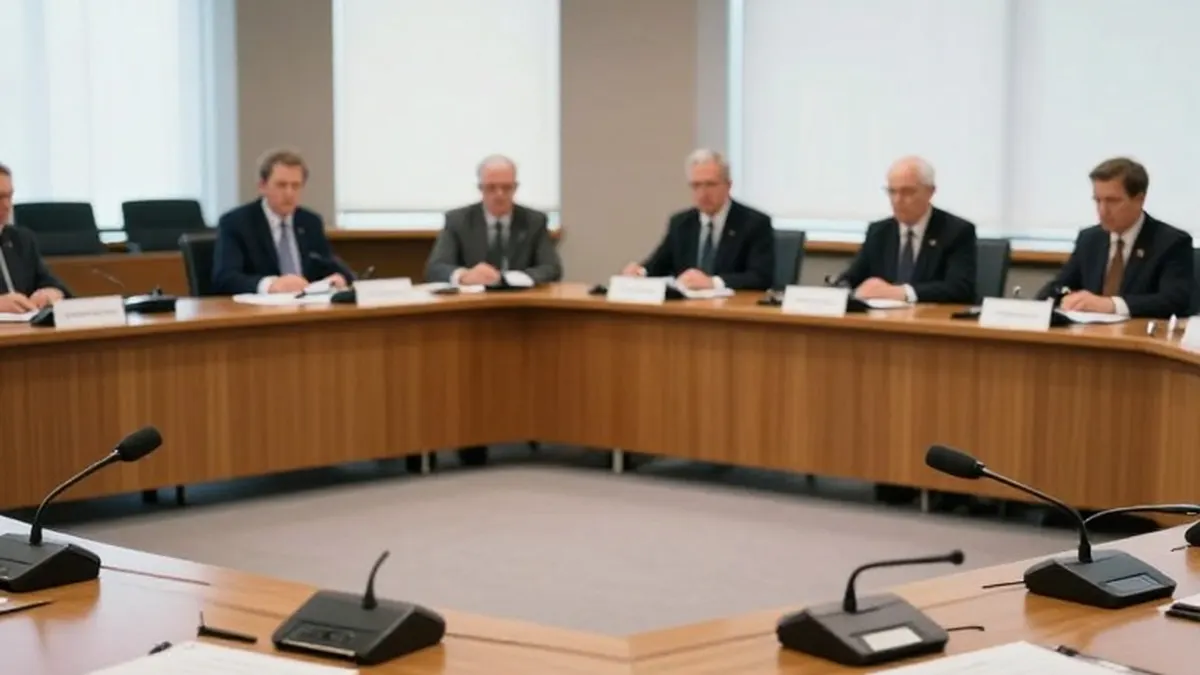
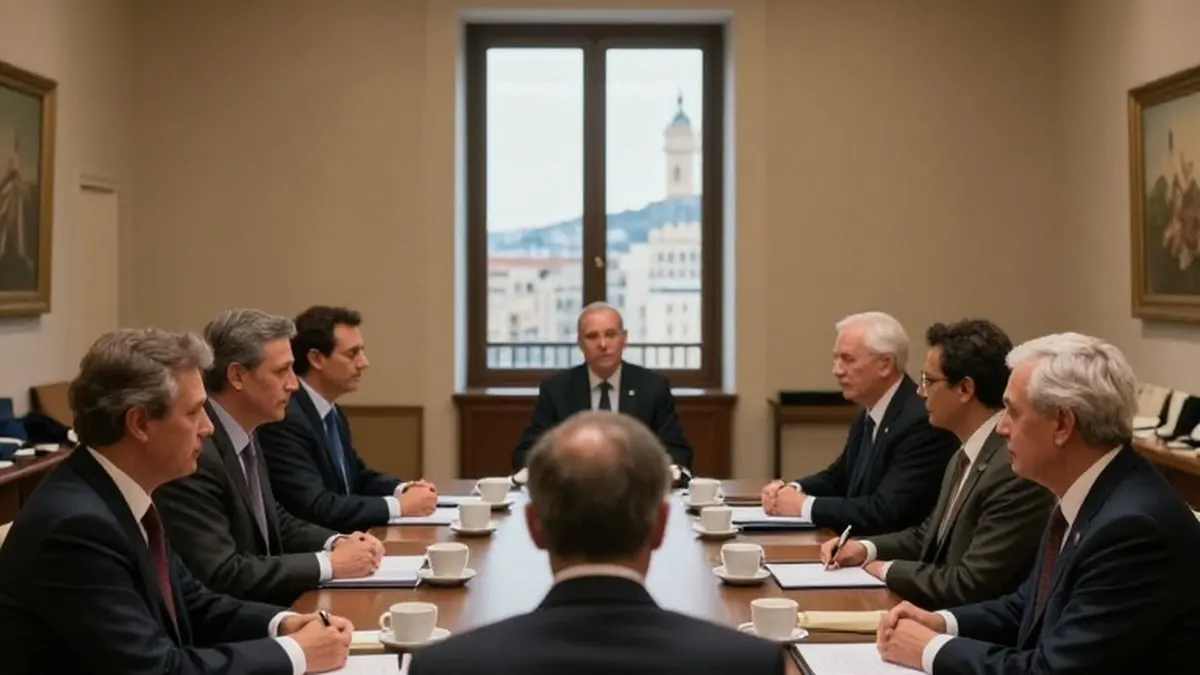
Chinese President Xi Jinping hosted United States President Donald Trump and Russian President Vladimir Putin in Shenzhen this Thursday for a trilateral summit. The gathering brought together the heads of state from the world's three most significant military powers at a time of heightened geopolitical tension. President Xi described the discussions as groundbreaking, noting that the agenda covered a wide range of topics including global governance, denuclearization, energy security, and the ongoing war in Ukraine.
Following the meeting, the three leaders released a joint peace declaration. Notably, the document did not explicitly mention Russia's war in Ukraine or the conflict in Iran led by the United States. Instead, the leaders agreed to pursue reforms within the United Nations and limit the role of the International Criminal Court. They also reaffirmed their shared commitment to avoiding nuclear war and pledged to increase the global supply of refined petroleum products to address energy challenges.
The tightly organized nature of the summit raised concerns among observers that Beijing, Washington, and Moscow may be seeking to reshape the international order around competing spheres of influence. Both Trump and Xi expressed satisfaction with the outcome. Trump described the event as really making history, while Xi characterized the talks as positive, constructive, and fruitful.
Analysts suggest that Russian President Vladimir Putin emerged as the primary beneficiary of the gathering. The summit, combined with separate bilateral meetings, provided an opportunity for Putin to demonstrate that he remains on par with the leaders of the US and China. This display of standing was significant given Western efforts to isolate Russia since the full-scale invasion of Ukraine began in February 2022. Emma Chanlett-Avery, a senior director at the Asia Society Policy Institute, noted that Putin appeared on the world stage as one of the dominant players.
Chim Lee, a senior analyst at The Economist Intelligence Unit, agreed that the meeting was a major outcome for Russia. He pointed to Russian media coverage that framed the event as a way to reinforce the country's global standing. For the United States, the summit offered President Trump a chance to think about his legacy during the final two years of his administration. A trilateral nuclear arms control arrangement would have been a significant achievement, but the final declaration settled for dialogue rather than explicit commitments to downsize nuclear stockpiles.
The issue of nuclear limits remains complex. The New START treaty between Russia and the United States expired in February. While Trump has advocated for a new deal that includes China, Beijing has been reluctant to accept strict limits. China's estimated arsenal of around 500 warheads is considerably smaller than the more than 5,000 warheads believed to be possessed by both Moscow and Washington. Lee argued that placing the three powers in the same category for arms control does not currently make sense from a Chinese perspective.
China initially hesitated to host the summit, worried about being explicitly linked to the Ukraine war and about forming a G3 club that might alienate other partners, particularly the European Union. However, Beijing managed to keep the European conflict out of the main focus. Chanlett-Avery observed that China successfully showcased Shenzhen's high-tech capabilities and secured a successful international event that attracted significant headlines, leaving the host feeling satisfied with the outcome.
Before the summit, Ukrainian President Volodymyr Zelenskyy had warned of a second Yalta, referencing the 1945 conference where Allied powers decided the post-war European order. In Shenzhen, Putin emphasized that the three nations, as victors in World War II and veto-wielding members of the UN Security Council, share a joint responsibility for maintaining international peace. However, Ying-Yu Lin, an associate professor at Tamkang University in Taiwan, described the Yalta comparison as a stretch due to the vast differences between the current moment and 1945.
Looking ahead, Putin stated that all three leaders agree the trilateral format is useful and that similar meetings could occur again. Lee believes this setup is unlikely to be a one-off event. He expects more such gatherings in the coming years, driven by the US interest in maintaining warm relations with both China and Russia.