Nuclear Briefcases Spotlighted at APEC Summit in Shenzhen
A Russian naval officer was seen carrying the Cheget nuclear briefcase during the APEC summit in Shenzhen, prompting renewed discussion on the role and history of nuclear communication devices held by world leaders.
By Amir Bennett ·
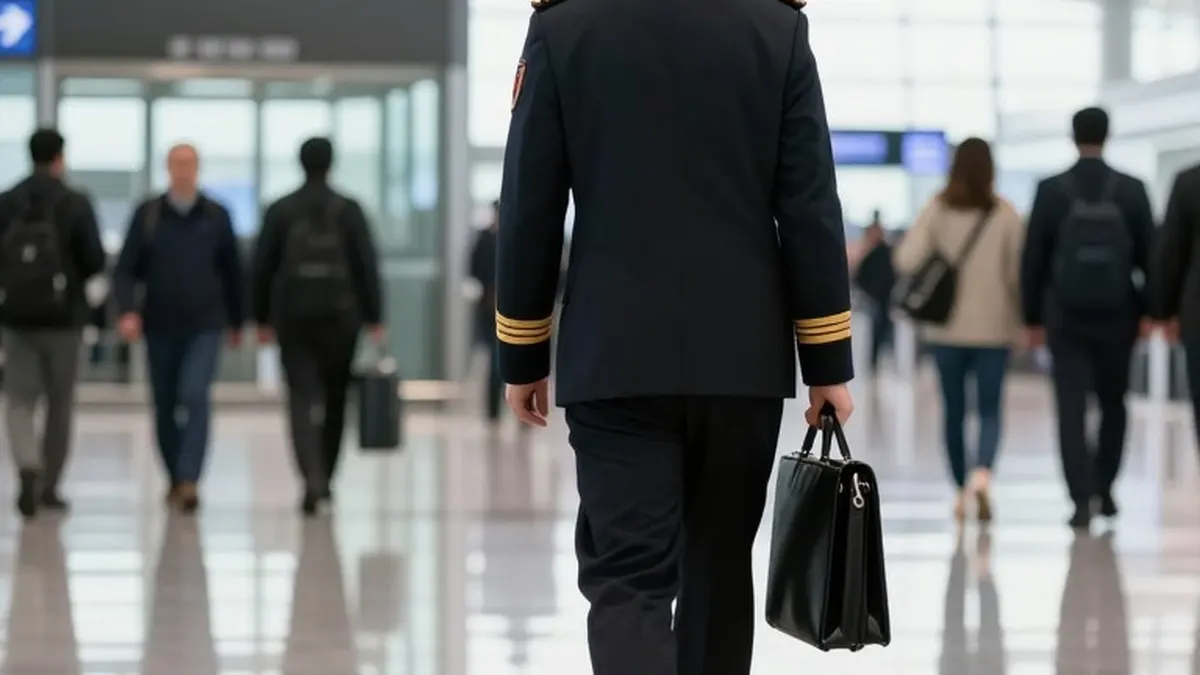
During the arrival of United States, Chinese, and Russian leaders in Shenzhen for trilateral talks on the sidelines of the Asia-Pacific Economic Cooperation summit on Thursday, a Russian naval officer was observed carrying a distinctive black briefcase. The device, known as the Cheget, provides the Russian president with direct access to the nation's nuclear arsenal. A state television reporter identified the case on camera, prompting the officer to confirm its identity before smiling for the audience.
While the United States president carries a similar item referred to as the nuclear football, that specific case had not yet been spotted in Shenzhen. It remains unclear whether Chinese President Xi Jinping travels with an equivalent piece of equipment. These devices have raised questions about whether they are merely symbolic tools for projecting power or functional instruments that allow leaders to authorize nuclear strikes immediately.
A nuclear briefcase is a specialized communication device that connects a national leader to the military command system. These systems originated during the Cold War when the United States and the Soviet Union faced the possibility of making rapid decisions regarding nuclear attacks. Although popular culture often depicts a leader pressing a single red button, executing an order actually requires military personnel and a complex communications network to verify and carry out the command.
The American nuclear football predates the 1962 Cuban missile crisis. Historical records indicate that President Dwight Eisenhower briefed his successor, John F. Kennedy, on the device just before Kennedy took office in January 1961. The US president also carries a card called the biscuit, which contains codes to verify identity when issuing orders. The vice president holds a backup football and authentication codes in case presidential authority must be assumed. According to the Congressional Research Service, the US president alone can authorize the use of nuclear weapons, though they may seek advice from senior military leaders.
Russia's Cheget is named after a mountain in the Caucasus region. It entered service in the Soviet Union in 1983. A naval officer traditionally carries the president's case. In 2015, a briefcase used by Boris Yeltsin, the first post-Soviet president, was displayed at the Yeltsin Center in Yekaterinburg. The current version links the president to the Russian military's central command. It can transmit orders to use nuclear weapons but cannot launch them independently. Russia is believed to possess three such briefcases, assigned to the president, the defense minister, and the chief of the General Staff.
Under Russian nuclear doctrine, the president decides whether to employ nuclear weapons. The Cheget communicates through the Kazbek command-and-control network, which supports a separate system called Kavkaz. Public accounts vary regarding how many briefcases are needed to authenticate a presidential order. The devices are designed to allow for attacks or counterattacks at any time, regardless of the leader's location, whether they are on a plane, at a summit, or asleep.
The presence of these cases is crucial for deterrence, as it signals that an adversary can expect retaliation. Thomas Schelling, an economist and strategist, noted in his 1966 book Arms and Influence that the power to hurt serves as bargaining power. Russian media previously showed Putin accompanied by officers with briefcases during a visit to Beijing in 2023. The recent footage from Shenzhen serves as a visible reminder of Russia's nuclear capabilities.
Simon Mabon, a professor of international politics at Lancaster University, described the Kremlin-backed broadcast of the Cheget as political theatre. He argued that it is a symbolic performance by a leader aware that his country's standing has changed. Mabon suggested that compared to the United States and China, Russia lacks the previous military and economic capacity, making this a performatively grand gesture to assert its place at the global table.
The Stockholm International Peace Research Institute identifies nine nuclear-armed states, with the US and Russian systems being the most documented. Other nations have provided more information about who can authorize nuclear weapons than about the specific equipment used. In the United Kingdom, only the prime minister can authorize use, and each new prime minister writes letters of last resort for submarine commanders. In France, the president holds that authority, with codes formally handed over during transitions of power.
China maintains a no first use policy, stating it would only deploy nuclear weapons in response to a nuclear attack. It is not known if President Xi travels with a dedicated case. India's political council, chaired by the prime minister, authorizes nuclear use, though equipment details are unclear. Pakistan and North Korea possess nuclear weapons, and Israel is widely believed to have them, but reliable public information regarding comparable briefcases for their leaders is limited.