Iowa residents brace for lead dust after US army approves bomb chemical detonation
US army plans to detonate unstable lead azide in Iowa, prompting evacuations and school closures as residents worry about a drifting cloud of toxic dust.
By Amir Bennett ·
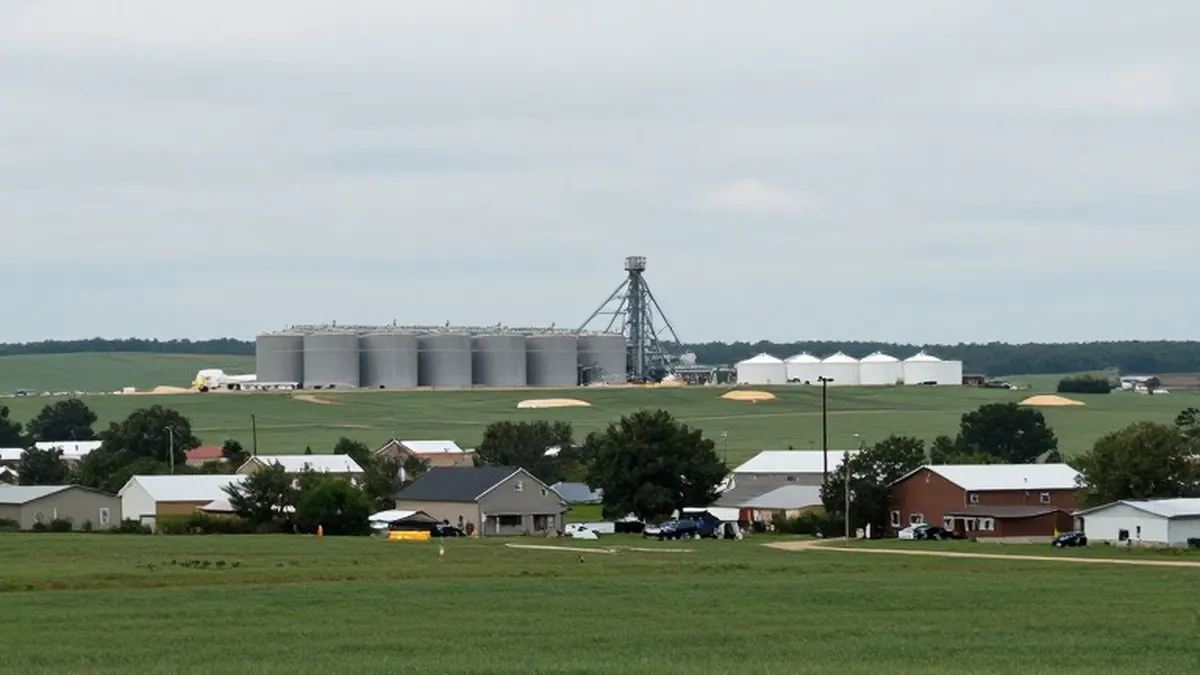
Residents in south-east Iowa are preparing for a significant environmental event as the US army prepares to detonate approximately five tons of unstable bomb-making chemicals. The operation, scheduled for Friday at the Iowa army ammunition plant, involves disposing of lead azide that has degraded over time. Officials fear that the explosion will release a cloud of lead dust, potentially causing health issues and environmental contamination for nearby communities.
The primary area of concern is Middletown, a town with nearly 400 residents. Local authorities have advised some residents to leave their homes on the morning of the detonation. For those who cannot evacuate, the recommendation is to stay indoors with all windows and doors closed to minimize exposure. An official advisory explains that the blast will create an air plume containing lead particles that will settle on the ground. Since lead is toxic to both humans and animals, the goal is to provide clear guidance to reduce public exposure as a precaution.
The army is using real-time weather data to update maps showing where the dust plume might drift, with current projections indicating a northern trajectory. The vibrations from the two planned blasts are expected to be brief but strong enough to break old windows. The resulting dust cloud is anticipated to linger for up to one hour, depending on wind speeds. While the army recommends cleaning outdoor surfaces and vehicles afterward, many residents have expressed doubt on social media about whether such measures will be sufficient.
The situation began in March when the plant, which had paused operations for a review, discovered that several dozen barrels of lead azide were no longer stable. Lt Col Daniel Nosse, the plant commander, stated at the time that the safety of neighbors was a priority. Details were shared with the public in October, and the Environmental Protection Agency granted an emergency permit on November 13. This permit required the army to monitor air and dust dispersion and notify the public five days in advance, leading to alerts for communities up to 100 miles away.
Surrounding areas have reacted quickly to the news. The Danville community school district will close its schools on Friday. Superintendent Pat Wallace explained that while he did not believe the detonation would create unsafe conditions, the uncertainty made closing schools the most responsible choice. In Mediapolis, located less than 20 miles away, officials were initially surprised to find their town in the center of the projected exposure area. Although an updated map moved them out of the direct path, local schools and the library will still close, and the fire department plans to wash down playgrounds.
Amy Stucker, the deputy city clerk for Mediapolis, described the situation as a first for many citizens, citing a lack of information as a major challenge. The office of Iowa Governor Kim Reynolds was briefed on the advisory on Monday. Environmental officials in Illinois have also taken notice, urging the military to conduct comprehensive sampling in their state after the blasts to ensure safety.
The instability of the chemicals stems from more than 20 years of storage in earthen containers filled with an ethanol and water bath. A routine check earlier this year revealed that some water had evaporated, causing the lead azide to crystallize. This process makes the material more sensitive to shock and friction, creating a dangerous situation. Moving the barrels was deemed too risky, especially as cold weather increases the likelihood of accidental detonation.
Justine Barati, a public affairs specialist for the army sustainment command, highlighted the team's concern about the weather and the risk of the chemicals detonating on their own. To mitigate this, the barrels are surrounded by buried concrete and soil, with sand barriers stacked two stories high. During the detonation, water will be sprayed on the soil and misted into the air to keep the lead on army property.
Experts are monitoring the potential health impacts, particularly for young children. Patrick O’Shaughnessy, a professor at the University of Iowa, noted that while the army and EPA are taking steps to minimize dust, the exact amount entering the atmosphere remains unknown. Lead is a neurological toxicant that can affect brain development, making toddlers who put objects in their mouths a primary concern. Officials considered other disposal methods but rejected them because handling the drums would increase the chance of a fatal accidental explosion.