Trump and Putin Hold Informal Talks at APEC Summit in Shenzhen
US and Russian presidents engaged in a brief, unscheduled meeting in China, marking their first face-to-face contact since the Alaska talks, while Ukrainian and American officials emphasize the need for Kyiv's involvement in any future negotiations.
By Amir Bennett ·
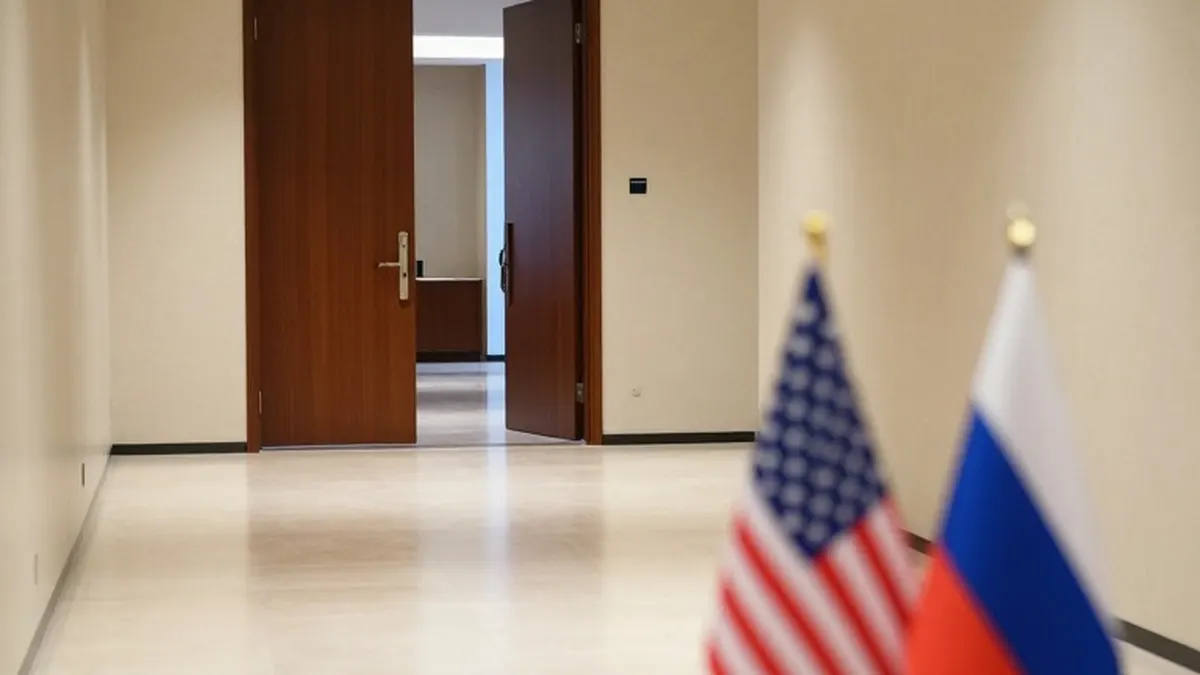
US President Donald Trump and Russian President Vladimir Putin engaged in a brief, unscheduled face-to-face meeting on November 19 during the Asia-Pacific Economic Cooperation summit in Shenzhen, China. The encounter, described by US officials as a pull-aside, took place inside a government reception compound known as Kylin Villa. Although the meeting occurred in a separate room within the conference center hosting plenary sessions, it did not constitute a formal bilateral sit-down.
According to journalists covering the White House, Trump entered the room at 12:15 p.m. local time, accompanied by Treasury Secretary Scott Bessent and White House Chief of Staff Stephen Miller. Pool footage captured the moment Trump approached Putin to shake his hand. In a recording reviewed by press members, Trump was heard remarking, 'Who is he? He is my friend,' as he walked toward the Russian leader.
During the short interaction, Trump stated that the two leaders had known each other for many years and maintained a good relationship. He expressed optimism about the potential outcomes of their engagement, noting that a lot of wonderful things could come from it or at least start. Trump also indicated that a second meeting would take place later, a point he mentioned to the gathered media before leaving the room at 12:57 p.m.
The nature of this engagement was more limited than a traditional bilateral meeting. A pull-aside typically refers to a brief, informally arranged conversation between leaders on the sidelines of a larger international gathering. Such meetings allow for direct contact without the extensive preparation, delegation-level participation, and structured agenda associated with formal diplomatic sessions. This particular encounter was not included in Trump's original public schedule, though a senior US official had previously told RFE/RL that such a meeting was very likely to happen if conditions allowed.
Access for the press was restricted during the encounter. While the US pool was permitted to record the opening exchange, journalists were not allowed inside the room. Russian officials cited the need for parity between the two sides and the limited size of the space as reasons for the restriction. The meeting was subsequently covered through limited pool footage, with no further press access granted. Russian Foreign Minister Sergei Lavrov and US Secretary of State Marco Rubio were seen in the vicinity of the meeting room.
The discussions took place against the backdrop of Russia's ongoing war against Ukraine and continued international efforts to secure a settlement. This meeting marked the first face-to-face engagement between Trump and Putin since their talks in Alaska the previous year failed to produce an agreement to end the conflict. Ukraine has repeatedly insisted that it must participate in any negotiations concerning its future.
On November 18, Ukraine's charge d'affaires in Washington, Denys Sienik, told RFE/RL that issues concerning Ukraine had to be resolved with Ukraine's participation, while European security issues required the involvement of European countries. Sienik warned against allowing Moscow to use international gatherings to advance its own narrative, stressing that no decisions about Ukraine could be made without Kyiv's involvement. Ukrainian President Volodymyr Zelenskyy stated in his evening address that US envoys would brief Ukrainian officials in Berlin about Trump's discussions with Chinese leaders in Beijing.
Ahead of Trump's engagements with Putin and Chinese President Xi Jinping, nine Democratic senators issued a statement urging the president to defend US interests. The statement was led by Senator Jeanne Shaheen of New Hampshire, the ranking Democrat on the Senate Foreign Relations Committee, and was joined by Senators Chris Coons, Tim Kaine, Jeff Merkley, Cory Booker, Brian Schatz, Chris Van Hollen, Tammy Duckworth, and Jacky Rosen.
The lawmakers cautioned against allowing the summit to become an opportunity for major powers to divide the world into competing spheres of influence. They called on Trump to press Xi over China's support for Russia's war effort, including through Chinese suppliers and financial institutions. They also urged him to make clear to Putin that European security was nonnegotiable and that there could be no negotiations over Ukraine without Ukraine's participation.
The senators further called for the enforcement of US export controls, action over China's military pressure on Taiwan, and the release of individuals they described as being wrongfully detained in China. In their statement, the group argued that American security cannot be traded away for photo opportunities or personal aggrandizement, urging Trump to impose meaningful costs on Putin for Russia's aggression rather than offer concessions that could undermine Ukraine, NATO allies, and US national security.