Putin proposes humanitarian pause in Kostiantynivka amid ongoing debates
Russian President Vladimir Putin has suggested a new humanitarian evacuation mission in the besieged city of Kostiantynivka, a move that Ukrainian officials and experts view with suspicion.
By Carolina Barrett ·
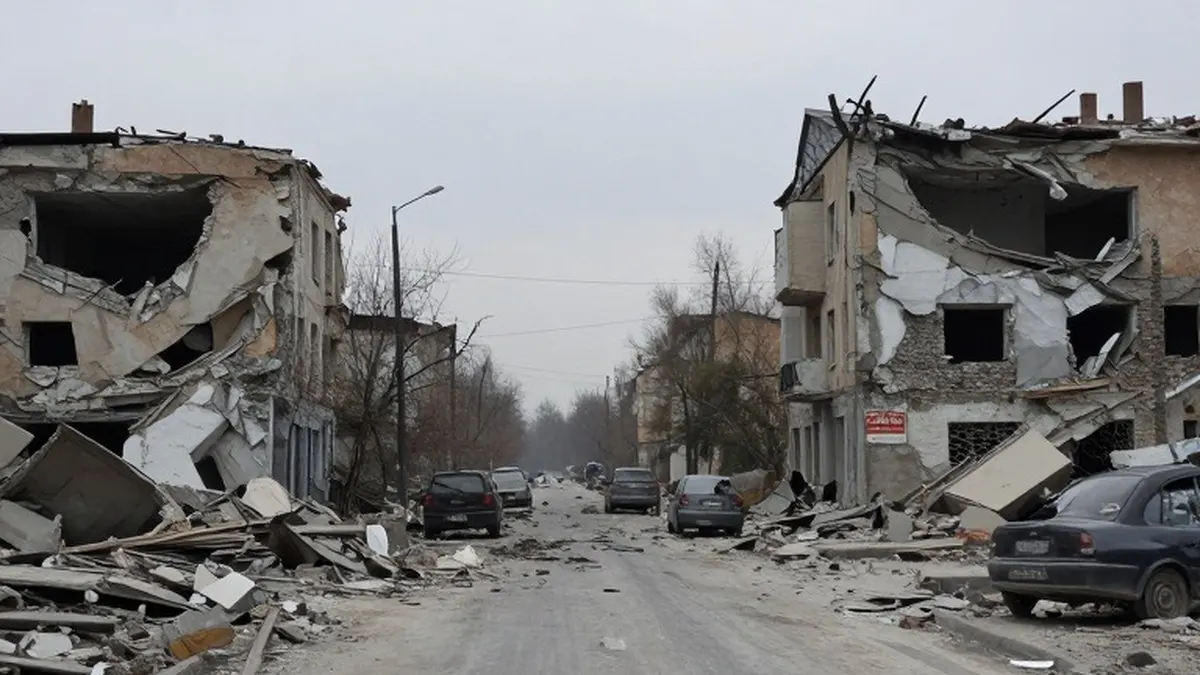
Russian President Vladimir Putin has put forward a proposal for a humanitarian operation in the city of Kostiantynivka, drawing parallels to a recent initiative in Oleshky. Putin asserts that Russian forces currently control the Donbas city and that the remaining civilian population should be evacuated. He estimated that five days would be required to clear the access roads for this mission. The plan includes the participation of human rights organizations from both nations as well as delegates from the foreign press.
This diplomatic move follows recent discussions between the Russian government and US representatives who are working to end the war. While experts note that Russia is signaling a willingness to make agreements, they argue that Moscow is simultaneously promoting its own version of the front line reality. In July, Russia declared that it had taken Kostiantynivka but offered no concrete proof. Ukraine maintains that fighting is still active in the area.
According to the DeepState open-source interactive map, which tracks military operations, the Ukrainian army still controls the city, although the situation is described as extremely difficult. Responding to the new proposal, Ukrainian President Volodymyr Zelenskyy stated that Putin simply wants Ukraine to leave so that Russian forces can occupy the entire city. Zelenskyy emphasized that Ukraine has consistently provided opportunities for civilians to depart. He also pointed out that Russia used the temporary ceasefire in Oleshky to move military equipment and weapons into the area.
Kostiantynivka is the southernmost city in the Donetsk fortress belt, a defensive line that also includes Druzhkivka, Kramatorsk, and Sloviansk. If Russia takes Kostiantynivka, it would open a path for troops to advance toward Druzhkivka and the larger urban area of Sloviansk and Kramatorsk. Oleksandr Kovalenko, a military expert at the Dmytro Tymchuk Center for Security Studies, compared the city's strategic role to that of Bakhmut, Avdiivka, and Chasiv Yar, locations where defensive positions held back Russian forces for years.
Local authorities describe the humanitarian situation in the city as catastrophic. Before the full-scale invasion began, the population was approximately 70,000, but only about 340 civilians remain. The city lacks central water, electricity, and gas supplies, as well as public transport. Since spring 2026, residents have only been able to evacuate on foot.
Denys Popovych, a military analyst, told DW that those who stayed need a chance to be evacuated. However, he noted that without a ceasefire, the process is virtually impossible because Russian troops occupy the road to Druzhkivka and drones are active throughout the region. Popovych stressed that Ukraine cannot conduct such an operation alone, noting that it takes two to tango to evacuate people.
Kovalenko believes Moscow is using the humanitarian issue as a tool for manipulation to strengthen its negotiating position. He argues that the Russian army is seeking time to reinforce units in the vicinity. Yevhen Zakharov, director of the Kharkiv Human Rights Protection Group, shares these concerns, describing the proposal as suspect and advising the Ukrainian side to treat it with utmost caution.
Kyiv faces a difficult position because US intermediaries are also pushing the idea. Popovych warned that if Ukraine rejects the proposal, critics may argue that it is rejecting peace and neglecting its citizens. After the Oleshky ceasefire ended in early November, the Ukrainian General Staff reported that Russia used the pause to rotate troops, entrench positions, improve drone defenses, and bring in ammunition.
Kovalenko is convinced that Russia is proposing a ceasefire because its army is gradually losing ground in Kostiantynivka. He warned that a humanitarian mission would allow Russia to consolidate forces, potentially leading to a disaster for Kyiv. However, Popovych does not think Ukraine should reject the idea outright. He suggests that Kyiv should base its tactics on previous experiences and insist on clear conditions, such as keeping soldiers at their current posts during any pause.
Oleksandr Pavlichenko from the Ukrainian Helsinki Human Rights Union believes Ukraine should submit a counter-proposal. This would involve the withdrawal of Russian troops from the city and the unimpeded departure of civilians. Pavlichenko argued that a strong, neutral third party, such as the International Committee of the Red Cross, should supervise the mission to ensure safe passage. He noted that a proposal coming only from Russia does not inspire confidence.