Palestinian Citizens in Israel Report Wave of Attacks Amid Political Tensions
A series of attacks on Palestinian citizens in Israel, including a mosque arson and a car-ramming incident, have heightened fears of violence following weeks of political incitement.
By Amir Bennett ·
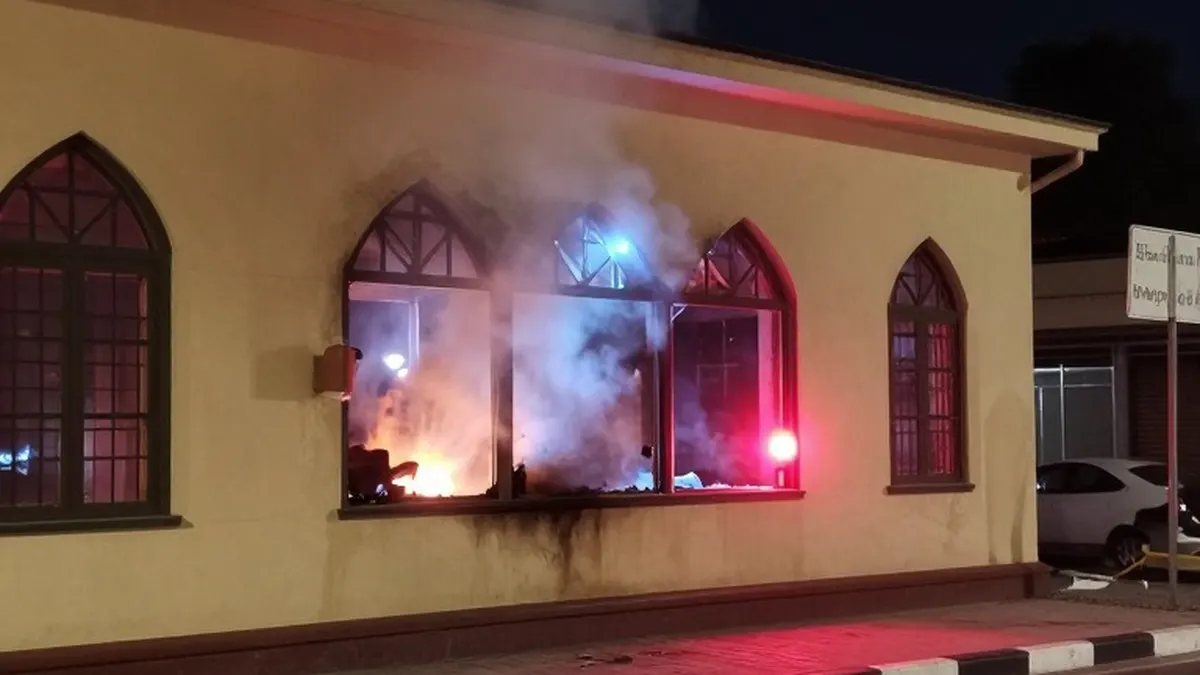
Palestinian citizens of Israel endured a series of violent incidents overnight on Thursday, following several weeks of intense political incitement directed at the community by Prime Minister Benjamin Netanyahu and his far-right coalition partners. The latest events include a suspected arson attack on a mosque, a car-ramming incident in a central city, and the appearance of racist graffiti on residential buildings.
In the village of Ed-Dahi, near Afula, a mosque was set on fire in what witnesses described as a deliberate act by a mob. Khaled Zoabi, the imam of the targeted mosque, stated that worshippers noticed smoke while arriving for dawn prayers. Upon reviewing security camera footage, the community identified three individuals carrying Molotov cocktails who had entered through a smashed glass window and spray-painted slogans, including the word 'Revenge,' on the exterior walls.
Zoabi noted that the attackers were unable to access the upper prayer floor, which is secured by iron gates, but much of the furniture and storage areas on the lower level were destroyed. He expressed concern that the community now feels vulnerable and fears the possibility of a return visit by the attackers, possibly armed.
Hours earlier, a car-ramming attack in the city of Kafr Qasim left eight people injured at four different locations. An eyewitness, who identified himself only as Mohammed, described the chaos of the evening. He recounted stepping out of a wedding hall to find women on the ground after a vehicle struck them and fled. The driver allegedly ran over multiple victims, including a mother and daughter, as well as a 20-year-old man.
Mohammed, a cement-mixer driver, attributed the attack to the growing climate of anti-Arab rhetoric. He argued that the perception of the perpetrator as Jewish led authorities to initially suggest he was under the influence of drugs, a narrative he felt differed from how an Arab attacker would have been treated immediately.
Political tensions have risen sharply since last month's elections, where Palestinian parties achieved record voter turnout and electoral gains. Netanyahu's Likud party, which failed to secure a majority, has claimed the results were stolen. Far-right allies have called for the arrest of Palestinian party leaders and fresh elections, while some lawmakers have urged citizens to arm themselves in anticipation of potential violence.
Orly Noy, a journalist and former chair of B'Tselem's executive board, described the current atmosphere as one of extreme incitement. She cited Netanyahu's recent speech at the Knesset swearing-in ceremony, where he alleged that Arab parties sought to demolish Israel, as a key factor in marking Palestinian citizens as enemies of the state. Noy expressed deep concern that the escalating hostility could lead to further deadly incidents.
In response to the overnight violence, Ahmad Tibi, the newly appointed deputy speaker of the Knesset, held the government politically and morally responsible for the climate of hatred. He demanded a serious police investigation and the punishment of the attackers, criticizing the influence of National Security Minister Itamar Ben Gvir on law enforcement policies.
Bakhar Awawdeh, a Palestinian lawmaker, advised the community to remain cautious and avoid being drawn into confrontations with the state, describing such conflicts as a strategic trap set by the government to sow division within Arab society.