Macron calls for renewed debate on Ukraine NATO bid at Berlin summit
French President Emmanuel Macron urged allies to accelerate air defense deliveries and reconsider Ukraine's NATO membership during a key meeting in Berlin.
By Youssef Carter ·
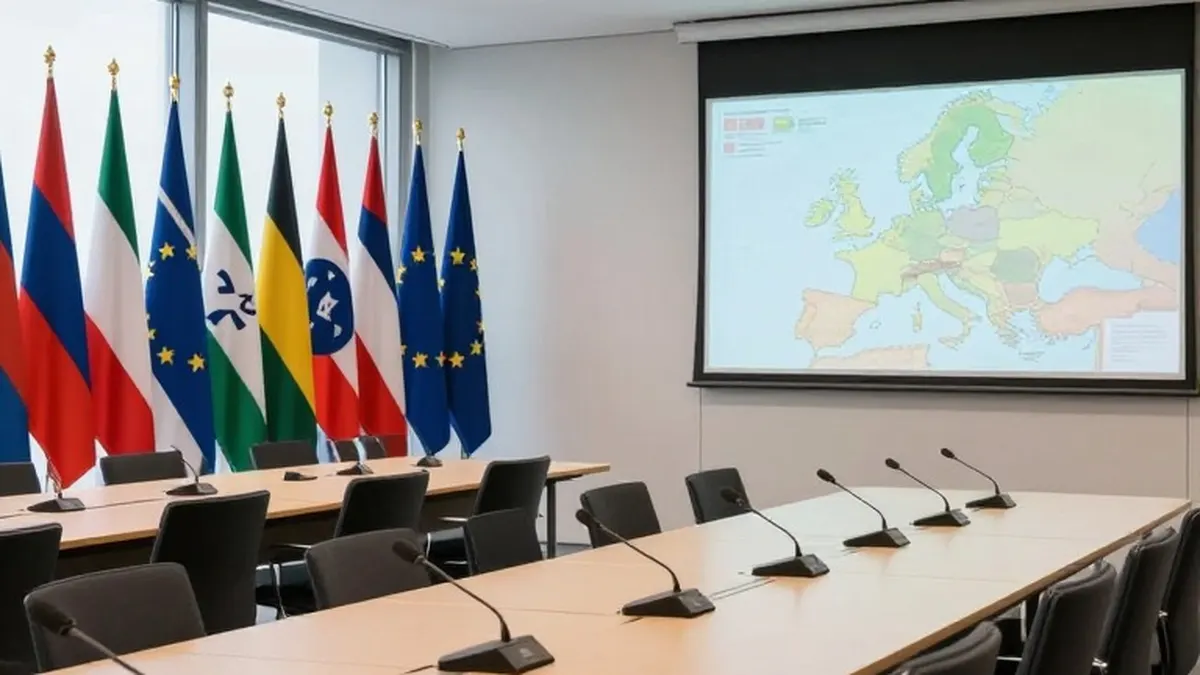
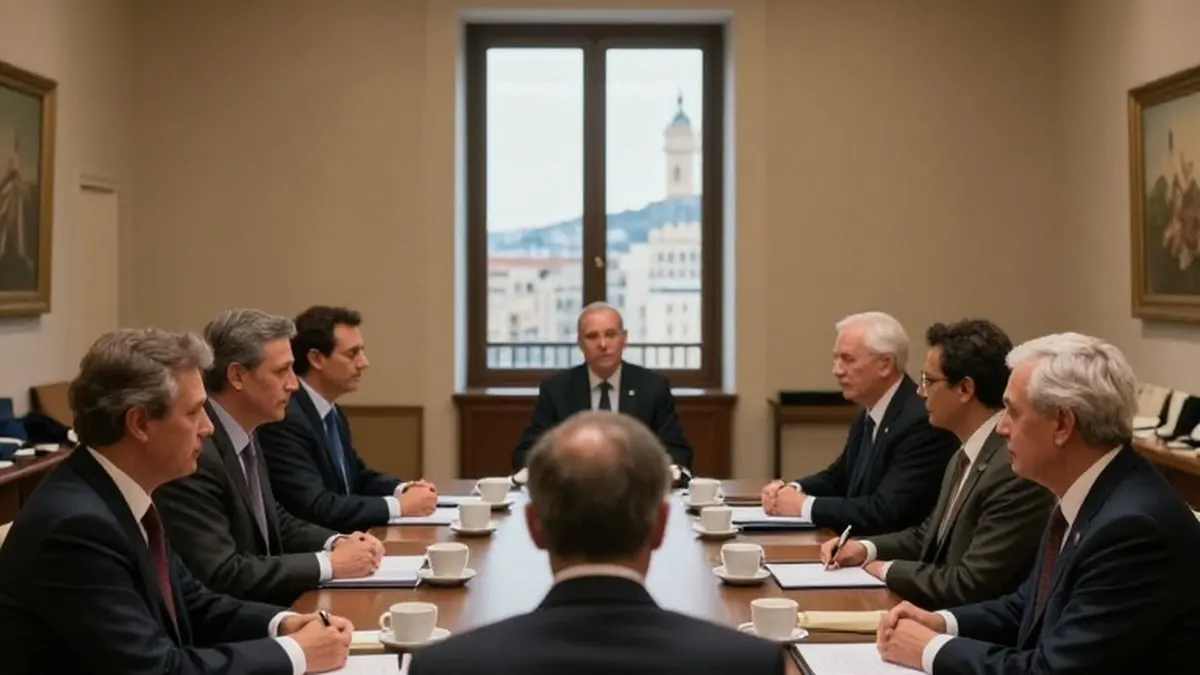
French President Emmanuel Macron called on Ukraine's international partners to expedite the delivery of critical air defense systems on Thursday. Speaking after a significant gathering in Berlin, Macron also urged allies to reconsider the issue of Ukraine's potential membership in the North Atlantic Treaty Organization. The summit, known as the Coalition of the Willing, brought together leaders to reaffirm their commitment to supporting Kyiv during the ongoing conflict and to advocate for a stronger European role in any future peace negotiations.
More than 25 leaders attended the Berlin talks, which were co-hosted by the heads of state from France, Germany, and the United Kingdom. Ukrainian President Volodymyr Zelensky was present at the meeting to emphasize the need for solid wartime support. Macron stated that given the maximalist stance of Russia, there is a need to reopen the discussion regarding Ukraine's accession to the alliance. He insisted that any nation with the capacity to provide defensive means must act immediately to protect Ukrainian citizens.
The French President highlighted that the immediate priority is the deployment of anti-missile systems and interceptors. He noted that the Berlin summit occurred just hours after an unprecedented three-way meeting between US President Donald Trump, Russian President Vladimir Putin, and Chinese President Xi Jinping in Shenzhen, China. Macron commented that the peace declaration agreed upon by these three leaders in China does not result in a global reorganization. Instead, he argued that the meeting in Berlin is the critical factor in Europe's own reorganization and security.
British Prime Minister Andy Burnham addressed the gathering, expressing hope that the message of continued support would be clearly heard in Moscow. He stated that the UK would remain at Ukraine's side for as long as necessary without faltering. German Chancellor Friedrich Merz, who also co-hosted the event, indicated that new peace talks for Ukraine are expected to take place soon. He noted that Europe is now poised to have a seat at the table alongside the United States, Russia, and Ukraine, though he did not specify an exact date for these discussions.
Merz mentioned that organizers are seeking locations on neutral ground for the upcoming negotiations, with the United Arab Emirates cited as a possible venue. US President Trump joined the Berlin talks via phone from Air Force One while returning from Shenzhen. Jared Kushner, a special envoy who attended the gathering along with fellow envoy Steve Witkoff, reported that Trump supported Europe's involvement in reaching a peace deal. Kushner indicated that the positions of the US and Europe were becoming much closer.
Kushner added that the US President was open to extending a security guarantee to Ukraine similar to NATO's mutual defense clause, while noting that Washington must protect its own interests. He described an Article 5-like guarantee as a significant step from America's perspective and stated that Trump was amenable to the idea provided it served American interests. Later in the day, President Zelensky addressed the question of NATO membership. He suggested that a genuine security guarantee for Ukraine would involve the presence of US or European forces and bases on Ukrainian territory.
The meeting underscores the shifting dynamics in diplomatic efforts surrounding the war in Ukraine. With high-level engagement from both European and American leaders, the focus remains on securing tangible military support while exploring diplomatic pathways that include European stakeholders. The convergence of these diplomatic tracks in Berlin highlights the urgency felt by allies to maintain pressure and support for Kyiv in the face of ongoing geopolitical negotiations.