ICJ set to deliver landmark ruling on Myanmar genocide case
The International Court of Justice is set to rule on whether Myanmar committed genocide against the Rohingya, a decision that could influence future international legal cases.
By Youssef Carter ·
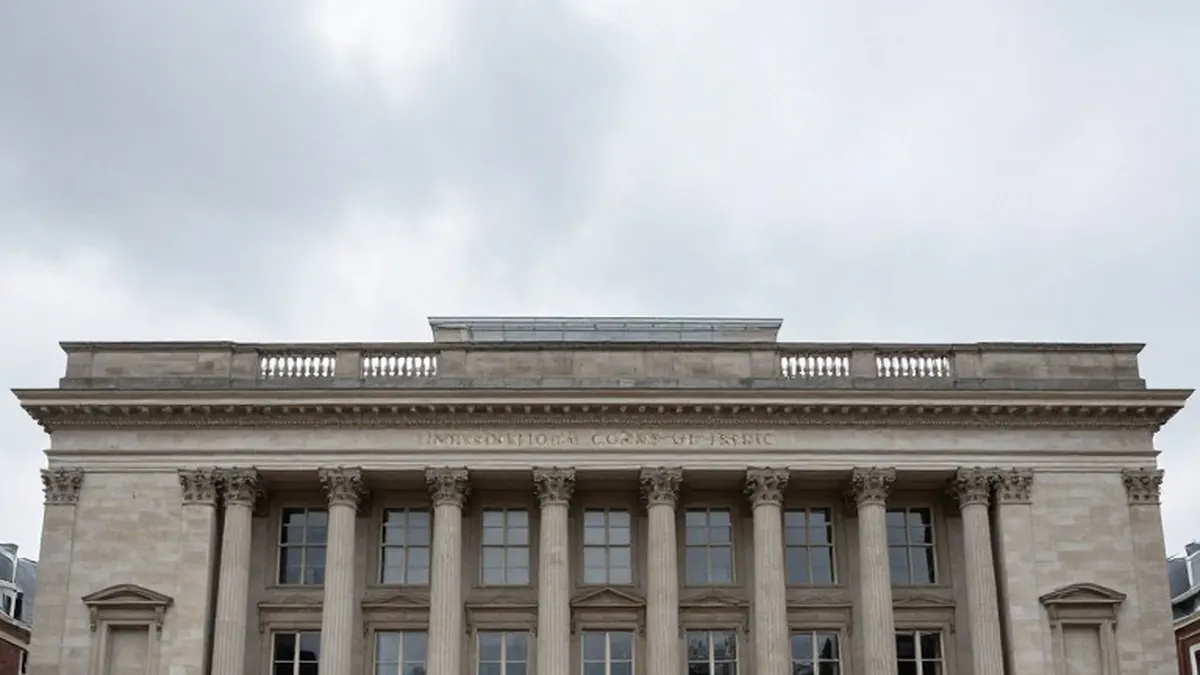
The International Court of Justice is scheduled to deliver its verdict on Thursday regarding a genocide case brought by The Gambia against Myanmar. This decision marks the court's first judgment on the merits of a genocide dispute in more than a decade. Legal experts indicate that the outcome may have significant implications for other ongoing cases, including South Africa's accusation of genocide against Israel in Gaza.
The Gambia alleges that Myanmar sought to destroy the Rohingya Muslim minority during a military crackdown in 2017. This operation forced hundreds of thousands of people to flee their homes. Myanmar maintains that its military actions were a legitimate response to attacks by the Arakan Rohingya Salvation Army on police posts. The dispute centers on whether the state acted with the specific intent to destroy the group, a key requirement under the 1948 Genocide Convention.
The background to the conflict dates back to 1982, when Myanmar excluded the Rohingya from its list of recognized ethnic groups. This move rendered nearly all Rohingya stateless, making them the world's largest stateless population. The situation deteriorated significantly in October 2016 and again in August 2017, when the military launched clearance operations in Rakhine State. United Nations estimates indicate that approximately 10,000 Rohingya were killed and 740,000 were displaced to Bangladesh during this period.
UN investigators reported that soldiers razed hundreds of villages and committed mass killings. They also documented widespread sexual violence, which they argued indicated genocidal intent. Despite these findings, the Myanmar military has announced convictions in only two cases since the violence. In one notable instance, seven soldiers convicted of killing 10 Rohingya men and boys were released after serving less than a year of their ten year sentences.
Since fighting resumed in 2023, the Arakan Army has taken control of much of Rakhine State. The UN High Commissioner for Human Rights reported in August that both the military and the Arakan Army have committed widespread abuses. These include torture, sexual violence, and forced recruitment. As a result, more than 155,000 Rohingya have fled to Bangladesh since early 2024, bringing the total refugee population there to about 1.2 million.
Most refugees reside in crowded camps in Cox's Bazar District, where they rely heavily on international aid. This support has declined sharply in recent years, particularly following cuts to foreign aid by the United States administration in 2025. Consequently, many refugees receive smaller food rations, and numerous camp schools have closed. The UN refugee agency has warned that recent arrivals often lack sufficient food, clean water, and healthcare.
The Gambia filed the case in November 2019 on behalf of the Organisation of Islamic Cooperation. The nation argued that the 2017 operations breached the Genocide Convention. In 2022, the court ruled that The Gambia had standing to bring the case because both countries are parties to the convention. Hearings on the merits took place in January of this year, with support from seven states including Canada, France, and the United Kingdom.
The court must determine if Myanmar committed genocide as a state, rather than ruling on the criminal guilt of individual soldiers. The Gambia argues that genocidal intent is the only reasonable inference from Myanmar's conduct. Myanmar contends it was conducting a counterterrorism operation rather than targeting the Rohingya people as a whole. The judges must assess whether the acts were carried out with the specific intent to destroy the group, which can be shown through direct orders or a pattern of conduct.
Legal scholars suggest that a finding of genocide would formally recognize the harm suffered by the Rohingya, though its immediate practical impact may be limited. Michael Becker, a professor at Trinity College Dublin, noted that the court may impose demands in general terms, leaving Myanmar to decide how to comply. He stated that such an outcome would likely disappoint those skeptical of the government's willingness to act in good faith. Becker emphasized that the ruling would primarily serve as a tool for diplomatic pressure.
William Schabas, a professor at Middlesex University, described the measures sought by The Gambia as robust, even though they did not demand citizenship for the Rohingya. He stated that if Myanmar implements the conclusions, it would have significant positive effects on the security and dignity of the Rohingya. The ruling is expected to clarify the court's standard for inferring intent, potentially treating armed conflict as an alternative explanation rather than an automatic bar to finding genocide. Schabas believes the outcome will have dramatic effects on other pending cases, particularly the case against Israel, which he considers legally stronger than the case against Myanmar.